
A home searching for life

This is a guest post by our dear friend Dr. Jehad Malaka in Gaza. I asked him if he could share with us what Ramadan is like in Gaza right now.
His words are so beautiful and I know you’ll agree his photographer is equally moving and powerful.
There will be a link to koha Jehad at the bottom of this story, or you can donate to the Aotearoa 4 Gaza mutual aid fund. Details below.
Thank you to all paid subscribers as your koha allows me to commission writers in Gaza to share what life is really like for them - something the NZ media is not doing.
Ramadan Kareem ☪️ arohanui Emily
Ramadan in Gaza: Between Rubble and Life, An Attempt to Survive
By Dr. Jehad Malaka
I begin by saying that we in Gaza are not without hope, even though many would ask us to cling to it more tightly.
In Gaza, there are makeshift decorations wrapped around the tents, coloured plastic bags and empty Coca-Cola cans that might cut the hand of a child as he strings them up while singing a traditional Ramadan song: “Halo ya Halo… Ramadan Kareem ya Halo…” As if the singing itself were a small attempt to resist this enormous devastation.
Yes, the displaced Gazaians have decorated their tents. But do not assume our hearts are equally adorned.
If you were to step inside those tents, you would find misery sitting in the corners, a primitive life that does not meet the standards of human dignity, no matter how much decoration tries to conceal it. You would find women resting their palms against their cheeks, wondering how they will prepare "suhoor", a meal of fast, over a weak flame of wood or plastic fire, under a worry that never goes out.
Not to mention soaring prices and the disappearance of basic goods from the markets.
Stagnant water flows between tents.
Garbage is creeping closer than it should.
The makeshift lanterns have not been able to hide this reality.
Ramadan has arrived in Gaza this year while it is weary, sorrowful, exhausted by isolation, as if no one has truly seen its pain.
Gaza today is like a child who has lost his mother: confused, trembling in loneliness, searching every face for a familiar embrace and finding none.
This holy month comes under a fragile ceasefire that we hope will endure and finally end the war. Yet Ramadan does not erase the scars of previous months, nor does it wipe away the pain of loss and displacement. Between tents sheltering the displaced, demolished homes, and markets that have regained only a fraction of their former activity, people stand on the edge of two conflicting emotions: the desire to live and the heavy burden of suffering that has not yet ended.
A question comes to mind:
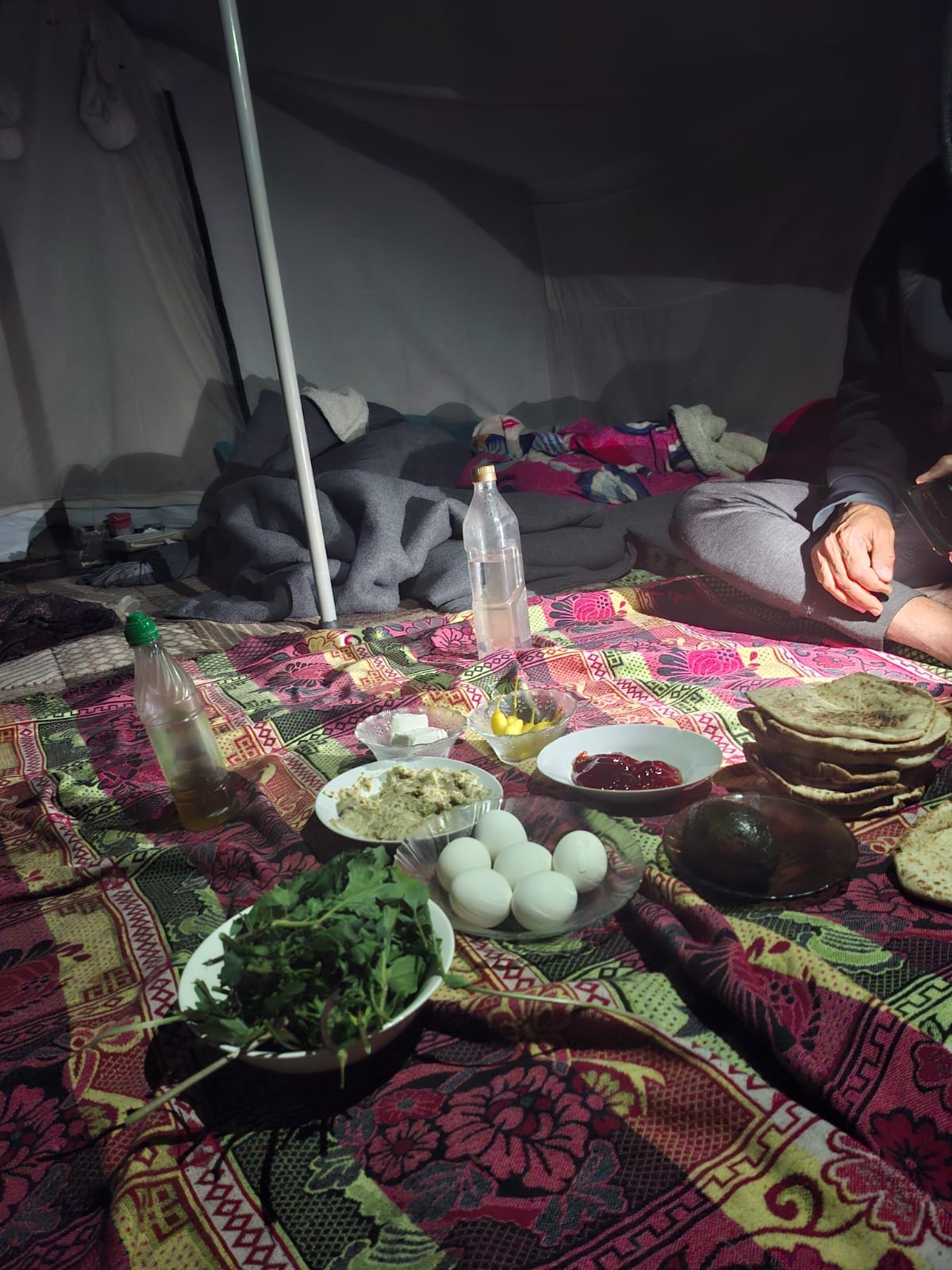
How does one fast while living in a tent lacking the most basic necessities of life? How does someone "suhoor" while waiting in line for water or a loaf of bread? In the camps, families try to make much from very little, to preserve what remains of Ramadan traditions, even if it is a modest "iftar" breakfast around a dim light or a small fire in the absence of cooking gas.
As for the orphans, widows, and the sick, their story is even more painful. They face Ramadan with hearts exhausted by loss and with growing needs amid scarce resources, even when their grief appears quiet.
A month once known for decorated streets, crowded markets, and the smell of hot "qatayef" sweets is now synonymous with tents, unemployment, incomplete meals, and the memory of homes reduced to rubble.
Preparations no longer begin weeks in advance. Shelves are no longer filled with apricot paste and fine dates. Neighbourhoods are no longer adorned with lanterns and lights.
In Gaza today, the primary question is: How do we secure "iftar" breakfast after 12 hours of fasting before we ask about its rituals?
On the harsher edge of suffering, displaced families face even more severe conditions. High prices have prevented them from buying even basic "suhoor" essentials such as yogurt and dates. Many rely on a single meal of rice or lentils. Meanwhile, the shortage of gas and the difficulty of lighting fires inside tents create further obstacles to cooking.
This Ramadan arrives amid near-total collapse. The war, which has lasted more than two years, has pushed unemployment to nearly 80% and poverty to unprecedented levels.
Prices for some goods have increased by more than 300% compared to before the war.
Just days before Ramadan, we in Gaza were shocked by sudden price increases in essential goods such as flour, olives, sugar, and eggs. A tray of 30 eggs is now around 95 shekels (around NZ$51). A 25-kilogram sack of flour nearly tripled in price, from 12 shekels to 35.
These rising prices exhaust a population already worn down by war.
Ramadan has become an additional burden rather than a season of economic vitality.
Between displacement tents and the ruins of homes, we try to revive Ramadan traditions as best we can. The spiritual atmosphere mixes with the burdens of loss, displacement, and poverty.
Where Ramadan was once a season of visits, family gatherings, and abundant tables, it has now become for many an occasion to remember those lost to war. Their names are spoken in prayer over modest iftar meals inside tents or damaged homes.
Gaza seeks life, and that is its natural right.
People need joy. They need dignity. They need a moment to forget the weight of past days. But celebrating Ramadan this year requires balance: joy without wasteful extravagance, celebration that does not ignore the homes still mourning their sons, families who have not completed their mourning because some loved ones remain beneath the rubble.
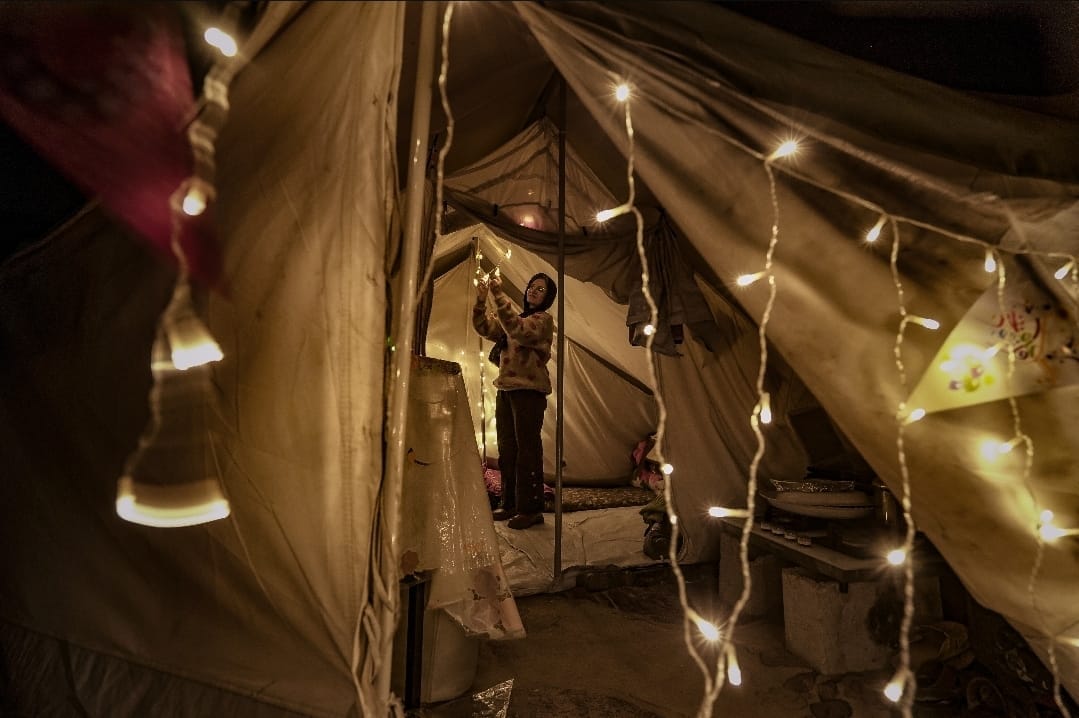
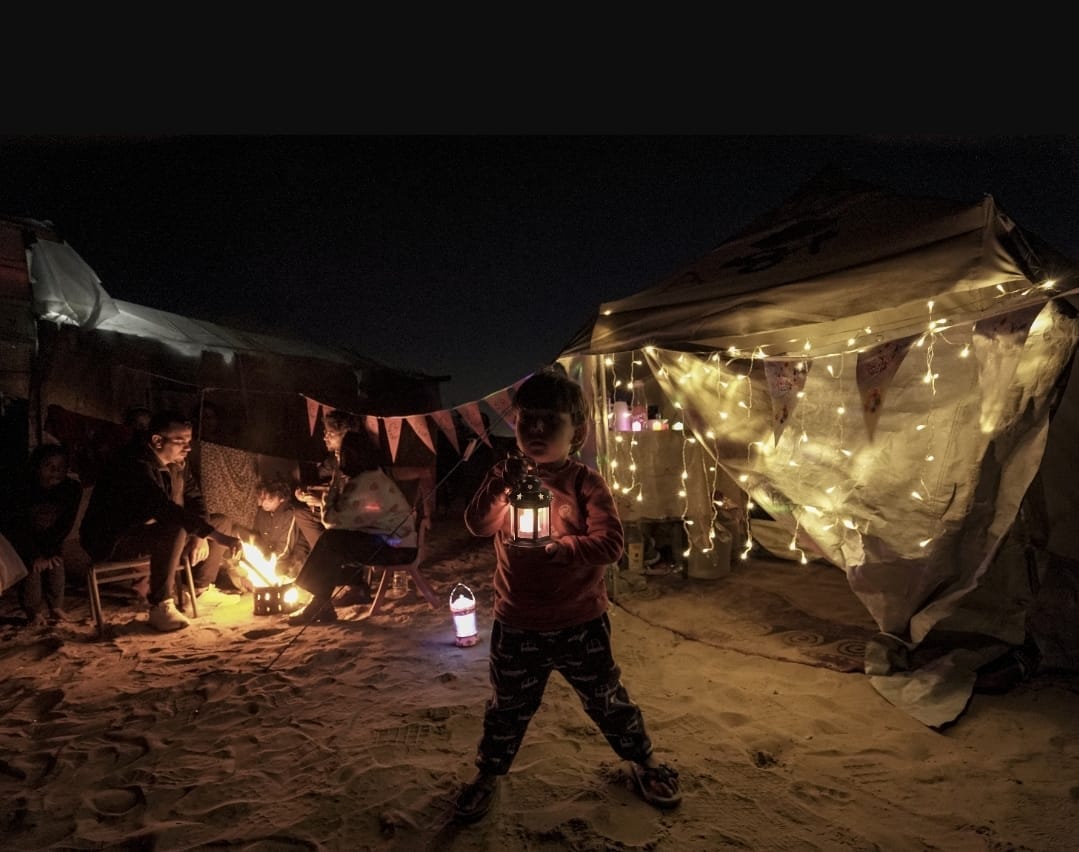
The war has not prevented displaced families from hanging Ramadan decorations in hope and anticipation of the fasting month. It is an old tradition we tried to revive. Families in our camp decorated their fragile tents with strings of lights and lanterns.
Glowing ropes hang along the tent’s sides, attempting to illuminate the darkness of war. Cardboard lanterns dangle from the ceiling beside yellow lights that create a warm Ramadan atmosphere.
Outside the tent, the family sits in joy mixed with sorrow, recalling memories of past Ramadans in their home and wondering how they will live this holy month under such harsh conditions.
Ramadan is the month of mercy and solidarity. It is an opportunity for people to draw closer to one another, not to drift apart because of appearances. This month can become a space to strengthen solidarity, support those most in need, and ease the burden on the displaced, the orphans, the widows, and the sick.
Suffering does not erase the right to joy, but it reminds us that the most beautiful joy is the one that includes everyone.
Gaza, searching for life, deserves to find it, not only in markets and cafés, but in justice that uplifts the poor, awareness that honours the grieving, hearts that share pain, and in peace, security, and safety that must return.
Do you know about the Aotearoa 2 Gaza Mutual Aid fund?
I've been running this fund with my friend Chaz for almost two years now. Thanks to you, we have been able to help thousands of innocent Palestinians trying to survive Israel's genocide. If you'd like to donate, you're welcome to!
The Christmas fund is still running. Or you can donate directly:
Account Name: Prosean Pictures
Bank Account: 06-0574-0906928-00
Thank you for your kindness and generosity. Israel’s ban on charities being allowed to operate in Gaza means families are still in desperate need. Even $1 helps. Arohanui x