
Do you want to hurt people?

Whenever I see a new policy announced by ACT, NZ First, or National, I genuinely wonder who they're targeting. Call me a drooling woke snowflake, but I can't figure out how people go through life excited by policies that amount to 'we get to hit disabled kids' or 'we disappear homeless people'.
I'm not quite as moronic as frothing right-wing commentators might think. I know there's cruel people in the world. But does it not feel like the quiet part is being said out loud just so much right now?
Feel free to skip to the comments if you read this already in your email!
I feel like the racism used to be a little more casual from the right. Their hatred of anyone different used to spend longer simmering. Now it's served on a platter, al dente. It seems to me that the powerful once tried to hide their bigotry. Now it seems that the campaign slogan for this government is just 'Do you want to hurt people? We can help with that'.
Just look at the news from yesterday. More than 8,000 New Zealanders declined emergency support to buy food - 88,000 applications for support were declined last year.
Food was deemed non-essential. Food.
 Henry Oliver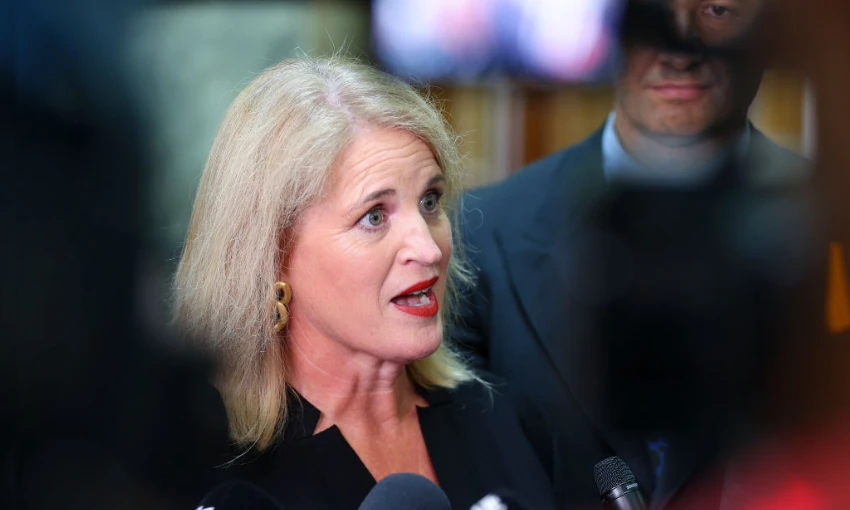
Cruelty is the point.
Let's look at the evidence.
So you wanna hit kids because you just had another Father's Day without contact from your adult children who want nothing to do with you because you harmed them irrevocably, and this is a way to feel like you're still powerful?
Nobody hates kids more than the dad whose own children are in therapy because he was such a terrible father. On a completely unrelated for legal reasons note, let's consider Paul Henry of ACT, who needs attention in the same way a toddler who has just shit their parents needs attention - urgently and immediately, or he will explode, and there will be shit everywhere.
Paul Henry and ACT label themselves as men just "saying what nobody else will say." But they don't realise that attacking disabled and neurodivergent children is the norm for their kind. And it's the norm for this government.
I mean, we have lists of all of the things they've done to harm disabled children, adults and their families!
- They cut funding to disabled adults and carers of disabled children for two years, then reinstated it without apology or explanation, or recognition of the harm caused. They were taken to court over it.
- There was, of course, the absolute shitshow that is the Disability Support Services Bill that 19,000 people made submissions against (it still went through, screwing over disabled children, adults, and carers).
- They gutted Whaikaha, the Ministry of Disabled People. This breaches Te Tiriti by the way...
- They made Kāinga Ora’s cut its accessible housing targets by 15%.
- Budget 2026 provides no new disability funding and requires Whaikaha to reduce spending by $1.5 million over the next four years.
- Benefit changes legislated under urgency in February will mean people on the equivalent of a disability benefit and their carers will lose out on more than $2300 a year by 2028 - a change equivalent to about 5 per cent of the recipient's income.
- They closed Tākai, a parenting resource hub which had supported families for 30 years.
- The Government reinstated prescription medication fees. A study has found facing a cost barrier in collecting a prescription was associated with a 34% higher rate of hospitalisation.
- They took away free flu jabs for most kids and adults.
- They ended a programme topping up the pay of disabled workers to the minimum wage.
- They removed funding for lots of free telehealth services, including one for COVID-19. And they cut free COVID-related GP visits and RATs (rapid antigen tests). They didn’t consult with pharmacies before changing the funding for Covid antivirals.
- There were huge cuts to community mental health groups. Advocates have said the funding has been halved to $5 million per year, and the Minister has also made the criteria so restrictive that very few organisations were able to apply.
- And they scrapped the income insurance scheme. That scheme would have protected workers who are suddenly disabled by illness to take time off, work reduced hours or retrain.
So it's no surprise, just a continuation of what they think New Zealanders want - attacks on disabled kids and adults.
So you wanna body slam people and pretend you're a cop because on some level you know toxic masculinity is a prison and you'll never be masculine enough to feel good about yourself but you're too afraid to acknowledge this truth?
When a middle-aged middle-manager on a power trip thinks a 15 year-old girl is stealing nail polish, should they not be allowed to use 'necessary force' including "physical or mechanical restraints" to hold them?
When Barry who has always secretly wanted to be Batman cuts off a brown kid with his Ford Ranger and emerges all spittle and fury, only to realise he's run over the kid's leg, and then he accidentally concusses himself while attempting to flee the scene, is that not normal and good and deserving of a veneer of legal protection?
Perhaps that's actually a bad idea?
If we really cared about shoplifting or crime in general, we'd look at what actually prevents crime. Weirdly, it's not allowing randos to arrest each other.
Instead of using evidence-based crime-prevention programmes, this government has decided to fund programmes they know don't work, ones that allow maximum harm and humiliation to those involved (spoiler: that also doesn't stop people from committing crimes).
The Ministry of Justice's own evidence states the best way to reduce crime is:
Alcohol and Drug Treatment [PDF, 273 KB]
Cognitive Behavioural Therapy [PDF, 305 KB]
Family Violence Perpetrator Treatment [PDF, 328 KB]
Restorative Justice [PDF, 317 KB]
The government's response to that mountain of evidence was Boot Camps. We know boot camps are expensive and don't work.
We all fought to try to stop Boot Camps, but they went ahead. And of course, an independent report found there was just immediate reoffending.
But this isn't about reducing crime, is it? It's about power.
So you wish homeless people didn't exist, but in a meat-grinder way, not in a wrap-around social support so nobody is without a home kind of way?
It seems clear to me that Christopher Luxon loathes unhoused people. When he first announced his plan to 'move on' homeless people (to where? who knows?), he didn't even know there was no night shelter in Tāmaki Makaurau.
This government is responsible for rising homelessness and poverty, yet those who are on the receiving end of the cruel policies are treated as problems to be disappeared. Wellington City Missioner Murray Edridge has said: "There's no question in my mind that the need we are seeing in our community, and the desperation of people's circumstances is greater than we've ever seen before."
In every budget, this government has cut funding to programmes that support our lowest-income families. Modelling provided from the last budget showed 84,000 families in social housing worse off.
This is a trend. In its first budget, the government cut funding to the Warmer Kiwi Homes programme and public housing maintenance.
Bernard Hickey reported in July that staff at MSD were threatened with being fired unless they kicked people out of motels to meet the Government’s target of cutting emergency housing in motels by 75% by 2030.
Around 4000 people were kicked out of emergency housing, and only a third of those declined emergency housing were given any alternative.
Against all research and expert advice, the government has enacted sanctions for job seekers. Sole parents, many who are carers of disabled children, lost up to 50% of their payment. Comprehensive research into these sanctions found: "little evidence in support of using obligations and sanctions (as in the current system) to change behaviour; rather, there is research indicating that they compound social harm and disconnectedness".
This government caused the harm they can see; that's why they want to hide it. It's the clearest example of their policies' impact.
So people being unemployed makes you feel powerful because you have a job, but the job is so unfulfilling you've told yourself that everyone without a job title is worthless, to give your spreadsheet-hucking some kind of meaning?
By every practical metric, unemployment has skyrocketed under this government - it's currently the highest it has been in more than a decade.
That includes the rate of people wanting more hours or work but not actively searching, which climbed to 13.8%, its highest since 2013, with 440,000 people wanting more work.
Long-term unemployment is also up, with the rate of unemployment far higher for Pasifika (11.6%) and Māori (10.8%) than for Pakeha (4.2%).
At a time when it's desperately hard to find a job, the government's response has been to cut access to unemployment benefits for thousands of teenagers searching for work.
So, given all that evidence of continuous, meaningless cruelty, why do people choose to be part of it?
Especially when we're seeing community mobilisation to focus on actually caring about each other, instead of harming each other.
Te Tiriti Action Group announced the launch of Te Wero Pōti - The Great Vote Challenge yesterday. The idea is to get people enrolled and voting.
Te Wero Pōti is a free digital app, available in both English and Te Reo Māori, that makes it easy and fun for people to talk to their friends and family (and maybe their frenemies???) about the election.
The free app and printed star chart provide easy-to-share, editable messages of encouragement and ideas to help support people on the journey to the voting booth.
“More than a million eligible people didn’t vote in 2023, predominantly young Māori and Pasifika. We know that these people need to get election messages from trusted places, so we’re really pushing people to reach out to their people - particularly their tamariki, mokopuna and their friends - who aren’t engaged and connect what matters to them with voting,” says Jessie Moss, spokesperson for Tiriti Action Group.
“In the last election, many people impacted by government decisions didn’t vote. We want to ensure all voices are heard this year by supporting people in kotahitanga to enrol and vote.”
Ultimately, whether we help or hurt each other is a choice. What choice are you going to make?