Grieve their very big life...

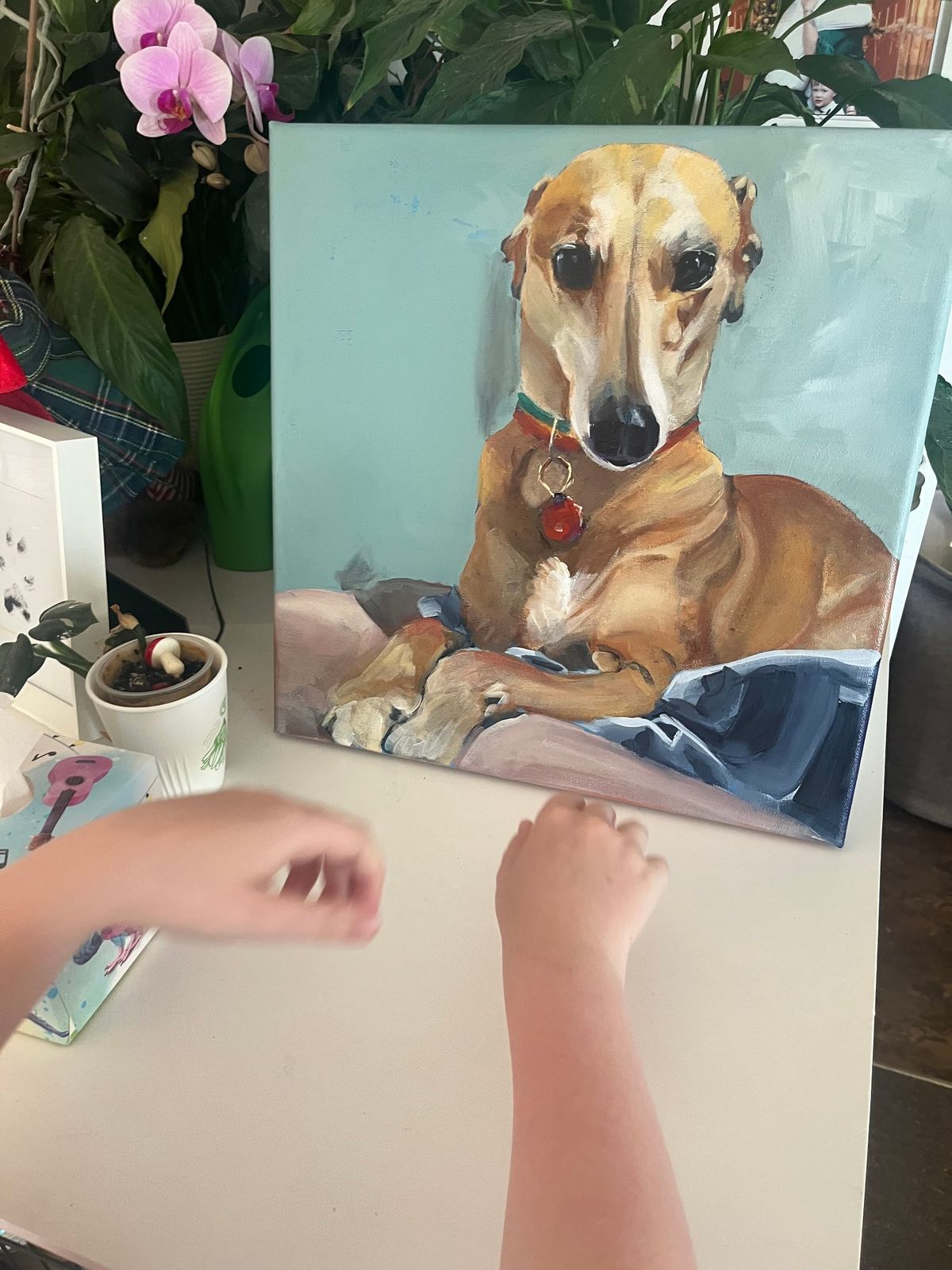
Over the weekend, my dear friend's dog passed away from cancer. When I saw the news, I was absolutely devastated for her. Losing my girl Twinkle was one of the most harrowing things I've ever been through. It was so sudden and so painful, and I couldn't believe how much it hurt.
Every part of me ached. I woke up exhausted by grief, and it felt physically painful. I missed her presence and felt like I could feel her body brushing against mine for months after she died.
Almost two years on, I don't cry every time I see a greyhound now. But I do still miss her most days. This is compounded by my poor choice to get another dog so soon after she died (don't do this - if you do, don't get a small dog, they're all mostly evil, I love Pipitita, but she is evil).
 Emily Writes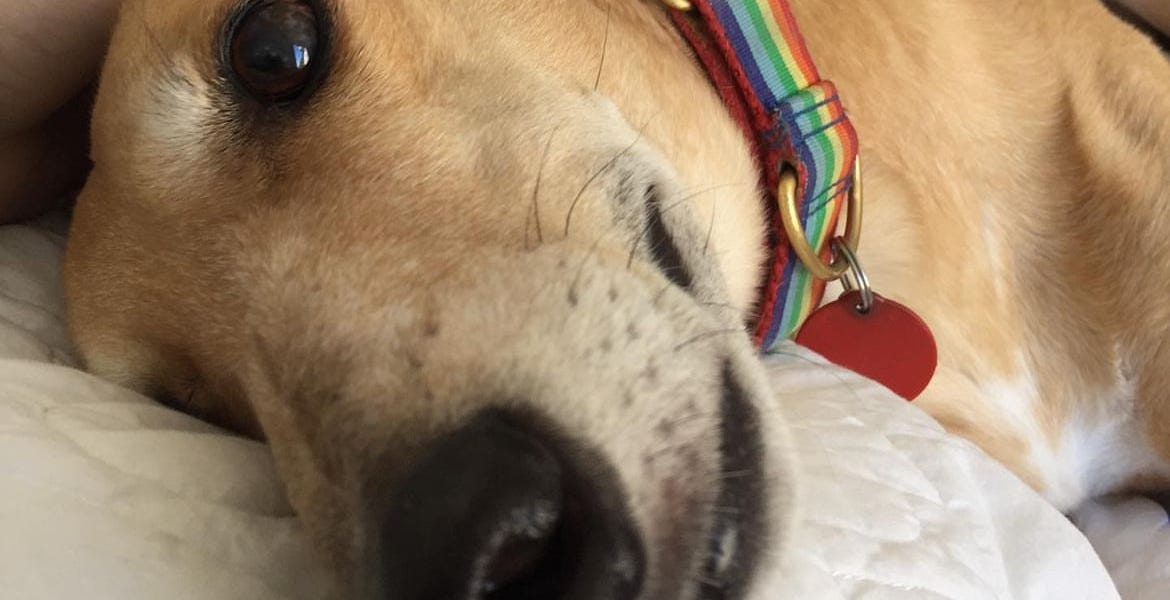
One thing that helped us with the grief of losing Twinkle was somewhat unconventional. And I always said I'd write about it, but I never did. So, when I was thinking about my dear friend and the long road ahead for her, I thought now might be the time to write this.
After Twinkle died, we were bereft. She'd been a constant presence for us. She was always 'just there' in the way that greyhounds are. She just lurched around.
The suddenness of her death was traumatic for all of us, but especially for my husband and the children. We'd not had time for them to say goodbye, and it would have been too upsetting for the boys to see her in the state she was in before she passed over anyway...
So, it had just been me holding my girl on the floor of the clinic as she died in my arms. I'd come home alone with just her collar. A tuft of her hair still attached to it.
Saying goodbye is so important. We believe this with humans which is why we have funeral rites. But it's strange we don't consider doing it with our pets - who share more of our lives with us than many relatives do.
You see your pet every day, pets are with us through every up and down, they're part of your family. Yet, we treat pet bereavement as something less than. I'm not at all suggesting losing a pet is like losing a child. It's something different obviously. I don't think comparisons help. It's a specific kind of agony that we just aren't very good at talking about.
We also realised with Twinkle that the news of her sudden death was traumatic for others. She was dearly loved outside of our family too - especially with the children in our community. She was a gentle giant, always happy for kids to lounge all over her. Twinkle was the dog that parents asked to borrow to help their children not be afraid of big dogs. They always fell in love with her.
When we decided to have a wake, it was to honour the role Twinkle held in all of our lives and to recognise that she would always be remembered as an important part of our worlds.
My bestie made a video of clips and photos of our girl set to Israel Kamakawiwoʻole's cover of Somewhere over the Rainbow. And we had everyone over for drinks and kai. We watched it together and everyone was able to have a good, cathartic cry.
We then all shared our favourite Twinkle memories. We got to recognise and honour the grief that kids outside of our family were feeling. And we were comforted by how loved Twinkle was in her relatively short life.
It affirmed our devastation at losing her. It allowed us to really feel our grief. And it helped us to celebrate her impact on our families.
Yes, she was just a dog to anyone else. But she was everything to us. She was a soft place, a safe place, a precious place that can continue to exist for us if we remember her well. Her memory might be an echo now, but that echo is a call for us too, a reminder for my whole little family: 'look, how easy it is to love and be loved!'
 Emily Writes
A tangihanga is named so for the word tangi - to weep. And I think the crying matters. To allow a precious being to go with grace involves a kind of selflessness that is soothed by tears.
I remember my first tangihanga - I'd grown up overseas and knew very little about Te Ao Māori until I met my husband. When I went to the first tangi with his whānau it was profound. I remember thinking it was a far healthier way to grieve that the buttoned-up white Christian way.
But there are obviously similarities. The kiri mate (the family that is mourning) is visited by loved ones and friends in almost all mourning rituals in every culture. This is because we know you can't heal from loss in isolation. We need each other.
Poroporoaki (farewells and eulogies) are spoken in the present tense, an acknowledgement that our loved one is always with us. Expressing grief openly instead of hiding it, is encouraged. This helps the grieving process.
The incredible bell hooks once said, “In its deepest sense, grief is a burning of the heart, an intense heat that gives us solace and release.” I've thought about that a lot. About how grief is an important human experience for all of us.
Facilitating grief is therefore important work. It's also work we must do in the presence of the young people in our life so that they know that to have great love you must expose yourself to grief.
To have a full heart you must face the risk that your heart will break too, but what a reward!
The life of a dog is short that's true. And some shorter even than others. I do think a dog chooses to love, and we do too. We choose connection and hope and yes, love. I think losing a loved pet just affirms all of these choices, no matter how painful the end can be.
And yes. It's so painful. But oh, wouldn't you choose to love again and again and again?
This post is dedicated to Mel and Gary and Renfield Viktor (Peep) Stockley 20/4/2020 (Llandelio, Wales) - 11/7/2026 (Featherston, NZ).
Rest in Peace Peep - you're a good dog.