
"How are we allowing this?" - A former mayor gives evidence at the Mana Wāhine Inquiry

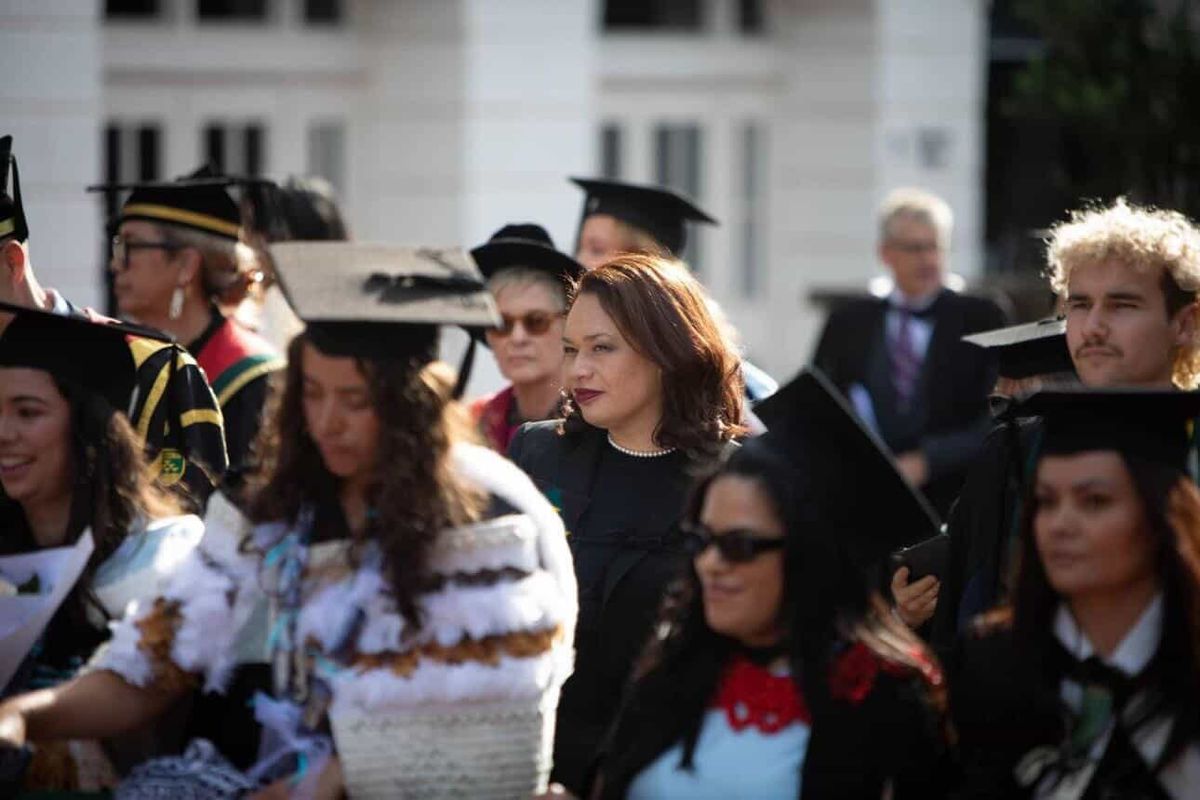
The Mana Wāhine Kaupapa Inquiry has just heard two weeks of evidence about the prejudice and discrimination wāhine Māori experience as a result of Crown breaches of Te Tiriti o Waitangi.
Former Te Whanganui-a-Tara mayor Tory Whanau gave evidence last week. With permission, I am sharing her testimony because it is vital that people listen to wāhine Māori.
Wāhine Māori leaders are too often driven out of politics through relentless gendered abuse, harassment, stalking and discrimination. We must confront this reality, ensure the next generation does not endure what so many leaders before them have faced, and create space for healing for those who have given so much in service despite the harm they are still experiencing.
Tory gave her evidence from Naarm Melbourne where she now lives. Like Jacinda Ardern, she no longer feels safe in her own country.
I also think it's crucial to share this and have it on record because it talks about the role of media. The Post and RNZ were relentless in their attacks on Tory Whanau and blatantly spread misinformation. I have spoken to journalists who worked at RNZ when they alluded to foul, untrue rumours that amounted to gendered abuse of Tory Whanau. They talked about how internally, the editorial team knew the story was untrue, and had been told by the owners of the bar and other staff that it was untrue, and the decision was still made to publish it.
This is horrifying. If what those journalists say is accurate, RNZ willingly took part in a harassment campaign. To publish when they allegedly knew the story was false - despite women staff begging for it not to go to press - is quite shocking. We might expect this at Stuff, given their owner took a role in a lobby group whose activities included agitating for Tory Whanau to be fired. But it's devastating to see how far RNZ has fallen under the influence of a tabloid editor.
I also think it's important to remember the behaviour of councillors like Ray Chung. We should never forget the roles WCC councillors played in this sexual harassment and racist abuse campaign. In any other job, if you sexually harassed a colleague by sending emails full of unsubstantiated sexual rumours, you'd expect to be fired. Instead, incoming Mayor Andrew Little appointed Ray Chung to the chair of an influential committee, in spite of Chung's admitted record of rumour-mongering.
To butcher a proverb: what we tolerate from political leaders and media today is what we unquestioningly accept tomorrow.
Here's Tory's piece. I'd encourage you to read it in full.
Feel free to skip to the comments if you read this already in your email!
If you’d like to watch this instead of reading it - you can view it here ⬇️
E mihi ana kia koutou
Ko Tory Whanau tōku ingoa. He uri ahau nō Pakakohi me Ngā Ruahine.
I served as the first Indigenous Mayor of Wellington City for three years. I was also
Chief of Staff to the Green Party of Aotearoa, and advised MPs such as Marama Davidson and Metiria Turei. I have worked alongside other wāhine Māori leaders such as Tamatha Paul.

I appear today in my personal capacity as a wāhine Māori leader who has served
in public office, but also as a witness to the harm experienced by other leaders
serving as elected representatives in an increasingly hostile digital environment.
My evidence is intended to provide a real-world example of how current systems
fail to protect wāhine Māori in leadership, and in doing so, fail to uphold equitable
participation in governance. It reflects a broader pattern of harm that directly
impacts who is able to enter, remain in, and succeed in leadership.
My evidence illustrates how political, media, and digital systems can combine to create an environment that enables sustained harm, particularly for wāhine Māori. It also demonstrates the impact this can have on individuals, whānau, and communities, and the risk that poses for democracy and representation.
Complex governance matters became personalised in a way that I do not believe
would have occurred to the same extent for a Pākehā male leader. This led to a
sustained pattern of disinformation, misinformation, racist abuse, misogyny, and heightened media scrutiny that became normalised over time.
This included defamatory claims, sexualised rumours, and coordinated online attacks.
Sexualisation and racism
From 2023 through to the end of my term, there were sustained and highly
sexualised disinformation campaigns about me. These sexualised rumours were
generated or amplified publicly by at least two of my own elected colleagues, Ray Chung and Nicola Young, and Auckland councillor and former Minister Maurice
Williamson, alongside many right-wing commentators online.
This generated intense media attention, including the publication of unverified
claims by Radio New Zealand.
As a result, I received thousands of online comments, and I apologise for my
language here but it’s important to outline what our future leaders will likely
experience:
I was called: “slag”, “DEI hire”, “whore”, “monkey”, “drunk cuck”, “dumb Māori pig”, “gobbler”, “fat cow”, “semen sponge”, “on her knees”, “pet horse”, “hori hoe”, “angry drunk”, and “Māori slut”.
These comments continued consistently across Facebook, X, TikTok, and email
over more than two and a half years, based on events that never occurred and
were repeatedly denied.
This was not random abuse. It reflected a broader pattern of systemic racism and
misogyny directed at wāhine Māori in public life. The abuse consistently relied on racist stereotypes that framed me as unintelligent, aggressive, sexually immoral, unworthy of leadership, and inherently less credible than my Pākehā counterparts.
The purpose and effect of this behaviour was dehumanisation. It attempted to
reduce a sitting Mayor to racist caricatures rather than engage with policy, governance, or leadership.
Academics such as Dr Mudgeway, Dr Hattotuwa and Tina Ngata have described
an ongoing pattern where women of colour and wāhine Māori leaders are
subjected to racist and misogynistic tropes that seek to undermine and de-
legitimise their leadership. This includes portraying us as reckless, deceptive,
unstable, or incompetent.
My experience is a textbook example of how disinformation that fuses racism and
misogyny escalates into online abuse, media amplification, and sustained
psychological harm.
This abuse continued after I left office when the media reported on my decision to leave the country. Again, Government-funded Radio New Zealand published the
story on social media. Their Facebook post generated more than 700 comments,
many of which were racist, misogynistic, and dehumanising. At the time I viewed
the post, no meaningful moderation had occurred. In my experience, this lack of
moderation was consistent across many media platforms.
Media coverage
Which brings me to the role the media play in amplifying this harm.
Author Emily Writes has written extensively about the treatment I received from the media and has described it as “relentless”, “racist”, and “misogynistic”.
 Emily Writes
 Emily Writes
In many cases, personal matters were prioritised over policy, unverified claims
were elevated into headlines, and harmful narratives continued despite repeated
denials. This shifted public focus away from governance and reinforced harmful
stereotypes about women of colour.
Media reported extensively on trivial matters such as:
- bringing my dog to the office
- selling my car
- socially drinking with friends
- and allegations that I had taken drugs and performed sexual acts at a bar.
They chose to amplify these narratives about the first Māori Mayor of Wellington
while simultaneously minimising substantive discussion about governance,
infrastructure, housing, climate policy, or delivery of a 12b long term plan, district
plan or annual plans.
The cumulative effect was the public construction of a racist and misogynistic
narrative that portrayed me as unintelligent, unstable, sexually immoral, and fundamentally unfit for leadership.
I do not believe a Pākehā male mayor would have been subjected to the same
level of humiliation, sexualisation, or dehumanising scrutiny.
There were also clear double standards in media treatment. For example, I
received at least ten negative headlines across radio, newspapers, and television
for selling my car, while another mayor received comparatively limited coverage
after actually breaking the law while driving.
This disparity reinforces the reality that wāhine Māori and women of colour are
scrutinised differently and more harshly than Pākehā men.
I witnessed similar patterns affecting leaders such as Marama Davidson and
Metiria Turei, and we are now seeing comparable treatment directed toward
Green MP Tamatha Paul and Far North Mayor Moko Tepania.
Public attacks on Māori leaders are often intertwined with wider misinformation
and disinformation narratives relating to co-governance, Māori representation, and Te Tiriti-based decision-making. Leaders such as Moko have also been subjected to misinformation and politically charged narratives linked to governance debates, illustrating how Māori leaders can become focal points for wider social and political hostility.
Similarly, misinformation circulated regarding Tamatha’s comments on water and cycleway investment. These attacks often begin online through misinformation, dog-whistling, and coordinated harassment before being legitimised through mainstream political and media discourse.
Racist narratives that would once have remained at the fringe are now amplified
into national political and media conversations, including at times by elected representatives and Ministers who should frankly, know better. That has direct consequences for the safety, wellbeing, and democratic participation of Māori leaders.
In my view, this reflects systemic racism operating across political, media, and
institutional systems, including failures by the Crown to adequately protect wāhine Māori participating in public leadership.
Lack of support
The support for leaders in this position is completely inadequate.
During my time in office, I had access to the Harmful Digital Communications Act,
Employee Assistance Programme (EAP) support, the Minister for Women’s Free to Lead toolkit, and the Areto platform to assist with moderating abusive online
content.
While these interventions provided some support and were valuable initiatives,
they did not sufficiently protect me from either the harm itself or the cumulative
impact of that harm. The abuse and harassment were persistent, multi-channelled, and far-reaching in scale, making it extremely difficult for existing systems to meaningfully mitigate the damage.
The impact
The impact was cumulative and significant.
Over time, I experienced anxiety, depression, ongoing psychological pressure, and physical health issues as a result of the sustained harassment and hostility I was exposed to while in office. I was afraid to leave my house out of shame. The impact also extended beyond me personally. It affected my whānau, close relationships, and contributed to the mental breakdown of one of my staff
members.
The harm does not stop with the individual being targeted. It radiates outward to the people around them, including staff, family, supporters, and wider communities. Wāhine Māori are also harmed simply through exposure, by
witnessing the treatment directed at women in leadership and absorbing the
message about what participation in public life may cost them.
These conditions directly affected my ability to lead and created constant
pressure within an already demanding and high-profile role. Simply, remaining in such a role became unsustainable.
Ultimately, I chose not to seek re-election and left Aotearoa in order to protect my
wellbeing. Those who harmed me have been re-elected and given promotions
which further normalises their behaviour.
I am now based in Melbourne recovering from severe burnout. I also carry intense grief at having to leave the role, my own whenua, my whānau, and the community I served.
While support systems do exist, they are not designed to respond to sustained
harassment or coordinated abuse campaigns of this scale. In my experience,
existing mechanisms are under-resourced, slow, and ultimately ineffective at preventing or meaningfully addressing the harm.
For example, despite spending more than $10,000 in legal costs and waiting over
eight months, I have yet to see meaningful action taken under the Harmful Digital Communications Act. Media accountability mechanisms are also limited, and with the recent BSA decision, could be disappearing altogether.
Even when complaints are upheld, the consequences are minimal and do little to deter future behaviour. In some cases, the conduct is effectively reinforced.
This issue is not about one individual experience. It raises broader questions
about whether wāhine Māori can safely participate in public leadership and
governance.
The challenge is not simply entry into leadership roles, but the conditions required to remain in them safely and sustainably.
In my view, this raises important questions about the Crown’s role in protecting participation in governance, ensuring safe conditions of leadership, and addressing systemic harm that disproportionately affects wāhine Māori.
These environments actively shape who is able to lead, who is driven out, and
whose voices are ultimately excluded from public life. While not Maori, even
Jacinda Ardern was significantly harassed and abused and is also living overseas.
How are we allowing this?
When wāhine Māori are subjected to sustained racism, misogyny, disinformation, and institutional failure without meaningful protection, participation in leadership stops being equitable. This is a democratic failure.
Solutions
Based on my experience, meaningful change will require a far more coordinated and systemic response than currently exists. The Crown has a responsibility to make this happen if we are serious about creating safer environments for wāhine Māori.
This includes stronger legislation, faster and more effective enforcement
mechanisms, and access to legal, emotional, cultural, and wellbeing support for those experiencing sustained harassment and abuse. Existing systems are largely designed to respond to isolated incidents rather than coordinated, multi-platform
campaigns of harm.
My experience highlights the inadequacy of current institutional responses.
Current reporting pathways and support mechanisms are fragmented, difficult to
navigate, and often place the burden back onto the victim to manage, document,
escalate, and absorb the harm themselves.
We shouldn’t be expected to individually document, fund, navigate, and survive
sustained campaigns of racist abuse while institutions move slowly or fail to act
altogether. That burden itself becomes another form of harm.
In my view, there is a need for a coordinated national framework to address harassment, abuse, intimidation, misinformation, and disinformation directed at Wāhine Māori in public leadership roles, including elected representatives at local, regional, and national levels.
This should include stronger cross-agency coordination between digital harm,
cyber security, online safety, media and social media regulation, and privacy
functions, which are currently spread across multiple disconnected departments and agencies. An independent eSafety-style commission or central authority with responsibility for online safety, digital harm prevention, rapid response coordination, platform accountability, and victim support.
Such a body could help create clearer reporting pathways, improve accountability across platforms and institutions, coordinate enforcement responses, and ensure sustained abuse campaigns are treated as systemic threats to democratic participation rather than isolated interpersonal disputes.
There is also a need for more effective accountability mechanisms for both online and media-based harm, including faster complaint resolution processes and
consequences that meaningfully deter harmful behaviour. This could include
giving the Media Council better scope, a stronger Code of Conduct for elected members and access to a legal fund so that individuals don’t have to pay out of
pocket.
Current protections are inadequate.
In practice, wāhine Māori are often expected to simply endure extraordinary levels of racism, misogyny, intimidation, and psychological harm as part of public
leadership. No democracy committed to equitable participation should consider
that acceptable.
Without stronger and more coordinated responses, wāhine Māori will continue to
be harmed by racist and misogynistic behaviour, be discouraged from entering or remaining in leadership roles, and that ultimately weakens our democracy,
representation, and public institutions.
I offer this evidence in the hope it contributes to meaningful change, so that we can better protect the current and next generation of Maori leaders.
Kia ora.