How to vote strategically in November


Every election cycle, you start to see it. Experts (well, actually, people who are absolutely not experts at anything) and commentators claim everyone must vote strategically. At the same time, others (also not experts) claim voting strategically isn’t possible or even moral.
It’s enough to confuse anyone. And when we’re all time-poor, overwhelmed, exhausted, and just wanting to be rid of this awful government, it’s hard to know who to turn to. Where do you even get information about strategic voting that you can trust?
Feel free to skip to the comments if you read this already in your email!
Every election cycle, I try to talk about MMP and how it works, and that’s hard too - are any votes really wasted? Is there extreme privilege in voting for a party that’s unlikely to get into Parliament or a party that says it will partner with National, ACT and NZ First? I mean I think so, but what do I know?
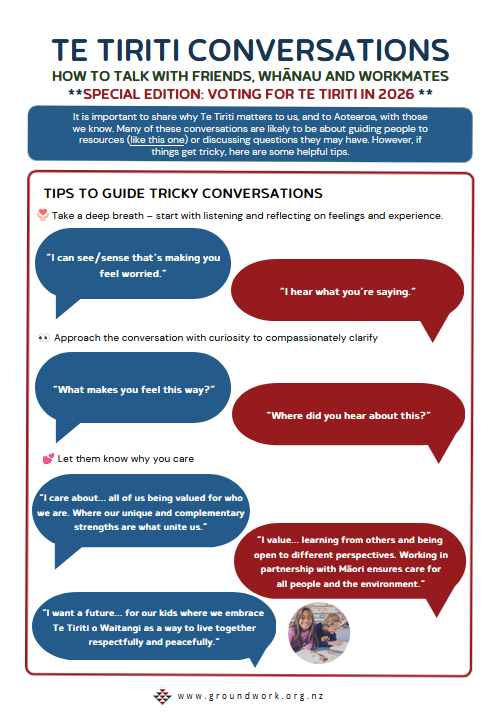
Lived experience matters, but I'd like to speak with someone who has expertise in strategic voting. I specifically wanted to understand how I - as tangata tiriti - can ensure I vote with Te Tiriti in mind.
Researcher, advocate, writer, author and scholar Tina Ngata kindly agreed to share her wisdom around strategic voting and voting for Te Tiriti with us. For that, I’m so grateful.
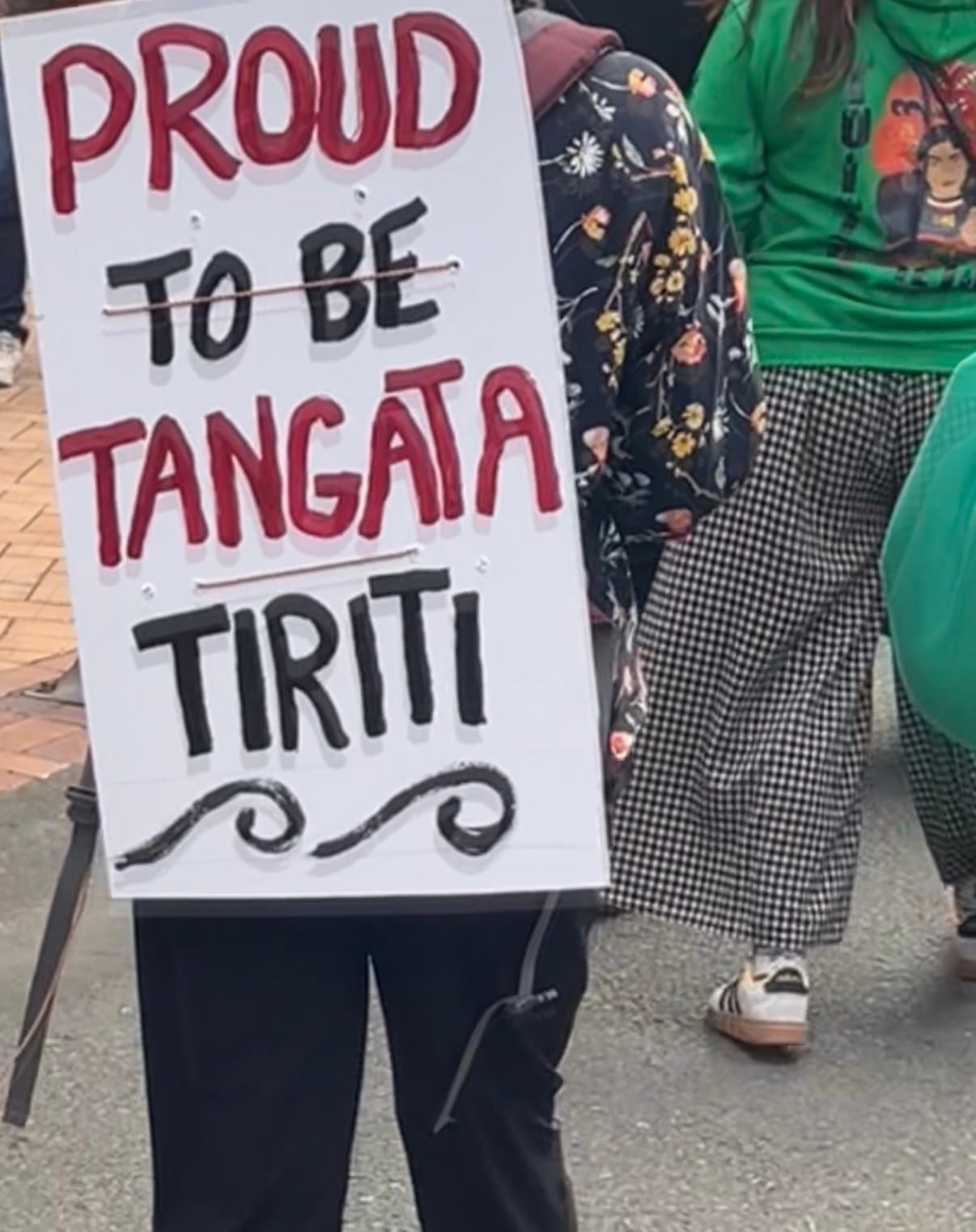
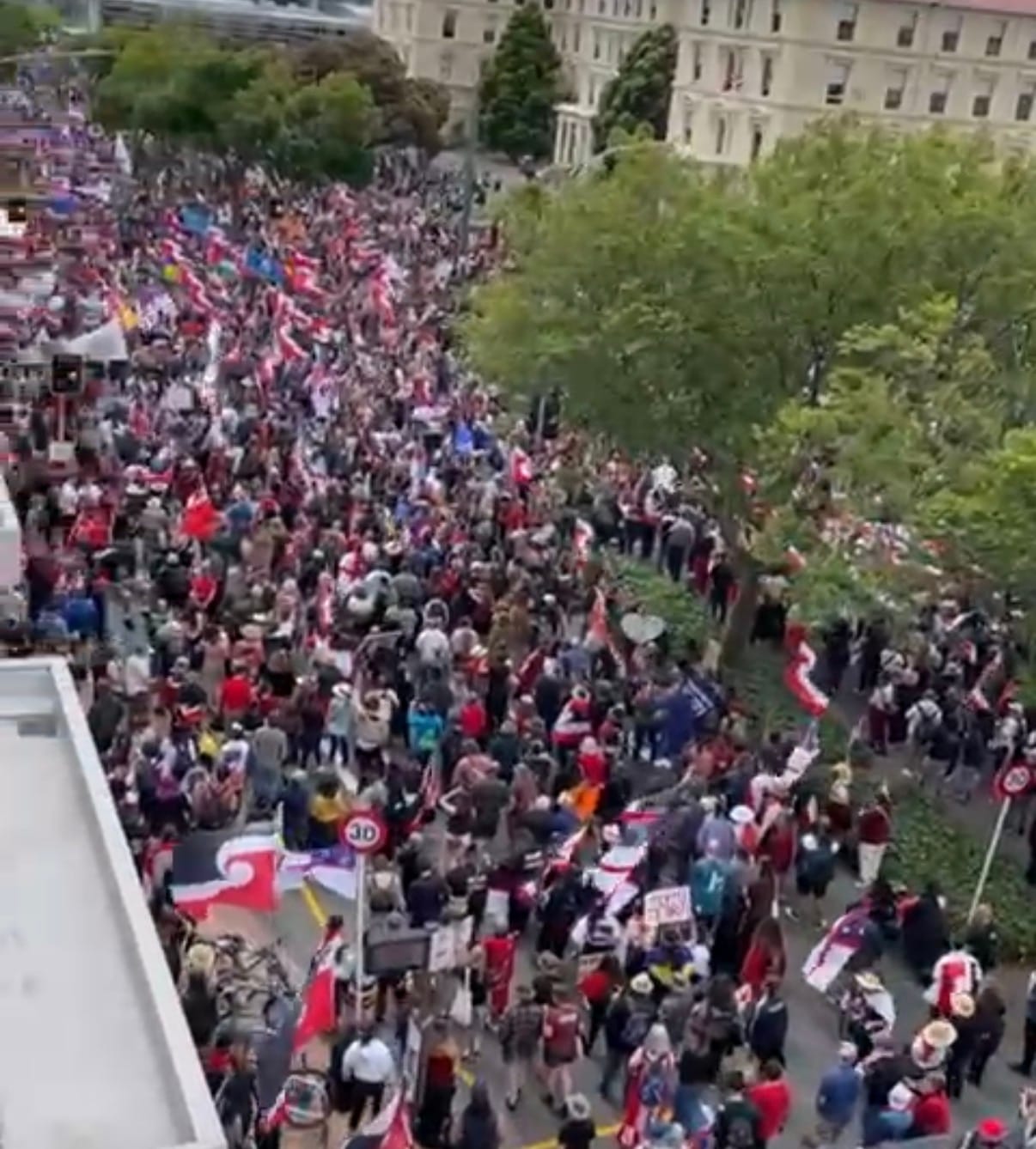
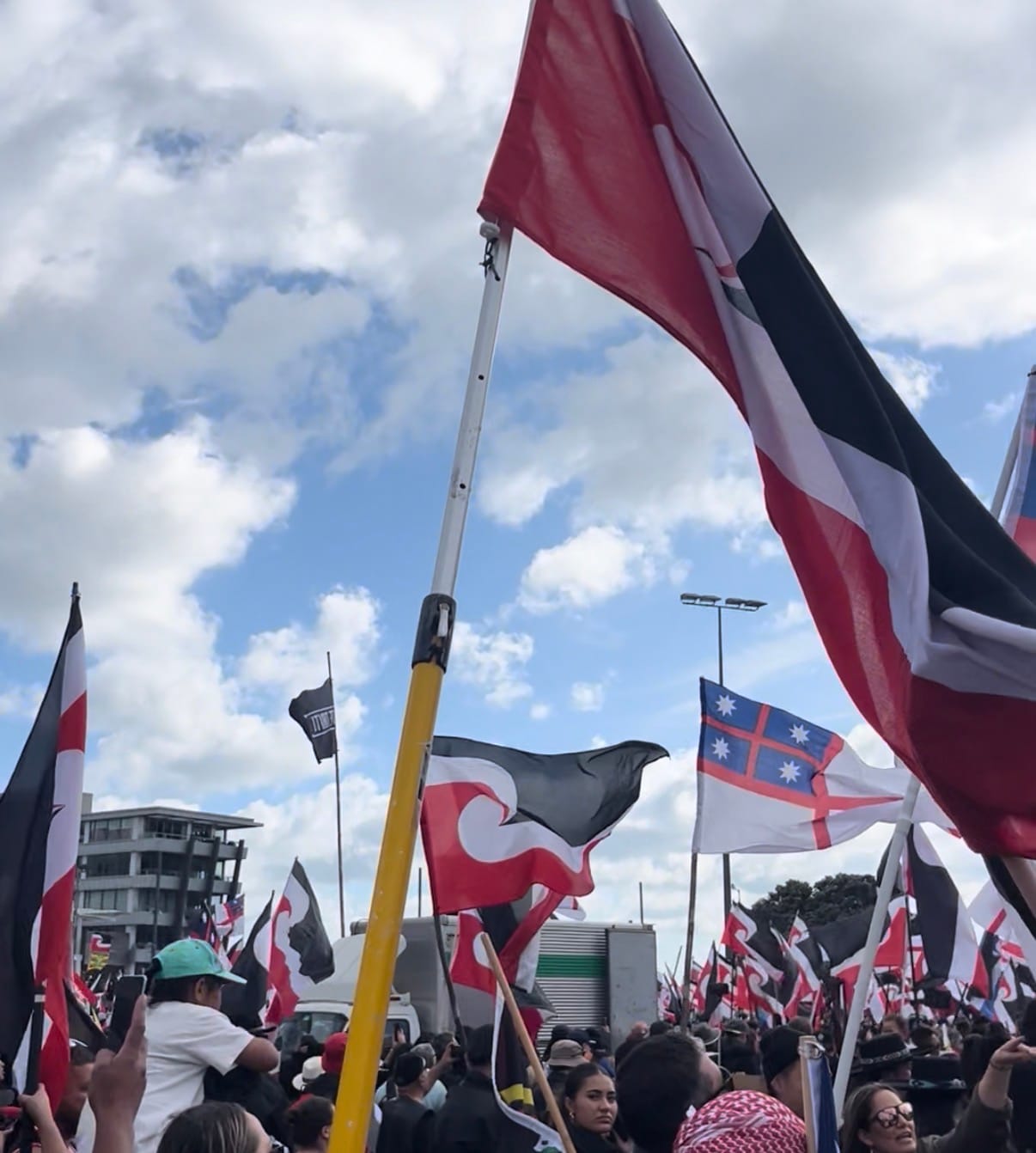
I can only speak as Tangata Tiriti, so I will. After the hīkoi of November 2024, I really felt that we Pākehā understood the urgency of committing to protecting and honouring Te Tiriti. I worry that we have lost that momentum. I know we can get it back, though. So let’s talk about how.
We will talk about how we as a collective - Tangata Tiriti and Tangata Whenua - can pledge to vote kaupapa over party.
Kia ora Tina, thanks so much for sharing your knowledge with us today. You’ve just published a raft of resources about how to vote for Te Tiriti. Can you tell me a little bit about what has driven you to do this important mahi?
Kia ora e hoa, thank you so much for the invite to chat about this. We are a small group of a half dozen driven wahine and our awesome tech bro, and we started “Vote for Te Tiriti” during last year's local elections.
In that election we took a positive approach and profiled all of the awesome local body candidates around the country who were committed to upholding Te Tiriti in their roles and councils… and you know of all the campaigns I’ve been involved in, I think I fell a little bit in love with this one in particular because it was so positive, especially when politics has become progressively hostile in recent years.
Much of the feedback we got was that whānau appreciated the positive approach, and the clarity of knowing that at least their vote was going to someone who was Tiriti-positive. Every election, we see politicians and others bombard the space with distractions and drama, manipulating media and fighting for attention. So we see real value in recreating a space that cuts through all of that and focuses on the kaupapa of protecting Te Tiriti.
People might ask, “Why Te Tiriti?” Why not vote for the climate or vote for unions or some other issue? That’s because Te Tiriti is constitutional, which means that when you protect it, you can protect other areas that could come under attack by bad laws, including taiao, the human rights of all peoples, rainbow rights, youth, and elders.
Te Tiriti protects it all, which is why these strategic attacks are so harmful. It is such an effective roadblock to harmful, colonial laws, and we have made it even more effective over recent decades. That's why pro-colonial groups want to stop Tiriti progress and reverse that trend.

What does it mean to vote strategically? Can you tell us how Matike Mai and Vote For Tiriti works?
I think it’s important to note first that strategic voting isn't unique to this election. Māori have always had to be strategic in this electoral system because it was not built for us, and even with Māori electorates, we are still consistently left with a political system that has maintained varying levels of violence towards Māori. We have had to deal with the tyranny of a colonial majority for 186 years now. So using your vote to its greatest effect for your people is a unique tool of survival for Māori.
Te Pāti Māori have, for many years, campaigned on intentional vote-splitting because typically, they do not receive 5% of the overall party vote, which is what’s needed to use their party list. So they rely on the electorate vote as an entry to parliament, arguing that giving the electorate to larger parties is a waste because larger parties can access parliament on their party vote anyway.
This election, that approach has been ratcheted up to another level, I think in part because the stakes are higher than ever, and now we see Te Paati Māori openly surrendering the party vote to place all their chips on the electorate vote.
Since MMP, strategic voting has largely been about party or candidate politics, but still within an overarching electoral system that is in itself a violation of Te Tiriti o Waitangi, and in fact a violation of Māori civil and political rights even by international legal standards.
For a long time, Māori have highlighted that our rule-making system in Aotearoa, including elections, violates Te Tiriti, and that all came together in the Matike Mai Report in 2016.
It was really a discussion about honouring Te Tiriti in the most important way: by placing it at the centre of our rule-making system (aka our constitution). There has been quite a bit of fear-mongering about these discussions by conservative politicians - even though they don’t seem to mind undertaking constitutional change that limits Te Tiriti. Internationally, though, constitutional rewrites have happened thousands of times around the world.
It’s not that radical, and both domestic and international legal bodies have told the New Zealand government it needs to resolve the issue of constitutional-level protection of Te Tiriti o Waitangi.
The past few years have shown us just how crucial that discussion really is, with unprecedented attacks upon Te Tiriti in order to lock in colonial, conservative power.
So Vote for Te Tiriti brings all of these threads together, and says “look, this whole system is not working, and if we really want to be tika we need to protect Te Tiriti in the strongest terms possible, so that it can in turn protect us all”.
In terms of how it works, it lays bare the commitment of various parties to protecting Te Tiriti, and challenges them to commit to protecting Te Tiriti. Parties like Labour have tried to play it down or ignore it, and further to the right, parties have dismissed it as radical - it’s not; there have been thousands of constitutional rewrites around the world.
The more people that place this challenge before the parties, the harder it will be for them to ignore it, and we will eventually force the conversation.
It's still a strategy, but it looks past party and candidate politics and focuses directly on the kaupapa of protecting Te Tiriti.
Does voting strategically help us remove the current government?
The trending strategy being promoted by Te Pāti Māori is to throw all of their chips into campaigning for the electorate seats, which would waive the 5% rule and secure Te Pāti Māori a place in parliament, and, as they argue, it will be a “two for one” deal by having the electorate MP in power by means of the party list.
It also means there will be extra seats in parliament - they call them “overhang” seats because, without the electorate win, they wouldn’t have gotten in, and it could make the difference in who holds the majority of seats, and therefore the balance of power - so yes, it can remove the current government, if done right.
Strategic voting has also backfired in the past, because it comes with its own set of risks. Of course, Te Pāti Māori never stood candidates in the general electorates, so this only applies to Māori electorate voters.
So the success of this strategy will hinge on how many Māori electorate voters get behind it, because in some cases it is asking Māori electorate voters to compromise on the person they might believe is best suited to represent their electorate.
Another factor will be whether general voters also get behind the strategy and promote it to Māori electorate voters.
You’ve talked a lot about how important it is not to fall into despair over what we’re seeing in government. How can we be motivated by hope in these times? How does voting for Te Tiriti support hope for our future as a country?
Look, the government have already created a lot of harm, and they will continue to do so if we don’t stop them, but they cannot kill Te Tiriti while it is on the lips and in the hearts of the people.
We must fight for it, we must continue to advance it, we owe that to both the past generations who fought through politically dire times to build its status to where it is today, and we owe it to future generations who will be burdened with the work we don’t carry out in our time.
So before we start talking about hope, I think we need to consider our duty to past and future generations, and what it means to be in the right relationship to the past, the future, this whenua, and the people of this whenua.
In my experience, people generally consider themselves to be essentially “just”. So this is an opportunity to take a “just” stand - and being just, and doing what’s right, does not always sit alongside hope.
That said, Te Tiriti still offers immense promise for what our nation could look like if it sat at the heart of our rule-making. If you take the time to read the Matike Mai Report, it holds a remarkable vision of a nation where nobody is left behind, a nation where the invitation that was extended in 1840 is kept alive, and honoured in its full integrity. In that sense, it is a beautiful means of belonging.
When people are secure in their belonging, there is less fear, less insecurity, less division, and less hate. All of this is made more possible when we have a government in place that is brave and ethical enough to take this path.
There’s enormous support for Te Tiriti, isn’t there? The Human Rights Commission survey found that 78 per cent of New Zealanders see Te Tiriti as important for our nation, and 70 per cent support its protection. Why does it feel like that’s not the prevailing narrative, do you think? Is it because the racists are just so loud?
Yep, when we look at the hīkoi, at the Treaty Principles Bill and Regulatory Standards Act submissions, at the HRC survey and the turnout for Waitangi Day every year, when we look at the local elections and how many Tiriti-positive candidates got in, at school board support for Te Tiriti, as well as the nationwide results of the referendum - which broadly supported retention of Māori candidates - and many other contexts as well, it’s clear that the majority of New Zealanders see Te Tiriti as a part of our fabric and identity.
And yes, racists are loud, but a colonial media landscape also supports that loudness. The social media landscape is also profoundly shaped by colonial privilege through algorithms. The political landscape, of course, protects racist speech, and we have so many examples of that in this government. That same government also appoints boards and commissioners who can protect disinformation and hate in the flimsy guise of “free speech”, and those appointments, of course, are what allow false, hateful narratives to thrive, because it serves their interests.
The narrative protects and legitimises the power framework - that is exactly why colonial power invests so heavily in media.
We should also remember that we are relatively young in our decolonisation journey, and that we are contending with 500 years of baked-in colonial privilege, which has its own amplification features, as a form of self-preservation.
I’m so grateful that you’ve talked about the swing between what you call “the centre-right (Labour-led coalitions) and the far-right (National-led coalitions)”. I totally agree and fear that the left/right wing discourse is way off course. Can you talk a bit about how Matike Mai helps us avoid the right-wing/right-wing trap?
Our current political arrangement is very adversarial. It courts conflict, both from the left/right spaces and within those camps, and all that conflict distracts us from the fact that the power arrangement itself needs adjusting.
Politically, around the world we are seeing an increase in polarisation - that is, groups moving further apart and becoming “polar” opposites, with increased hostility towards each other.
The electoral trend, internationally, is actually leaning further to the right - democratic elections are in general taking five steps to the right-wing, but the swing back to the left is only two to three steps, and then another five to the right again.
That means that what was considered “too right-wing” only ten years ago is pretty much mainstream now.
Aotearoa isn’t an exception, we are also caught up in this drift to the right, but it doesn’t have to be that way.
In fact, our whole approach to government could be much healthier if we exercise our imagination. It’s very easy - and colonially convenient- to get caught in a trap of believing that the way we do politics and government, is the only way to do it, but in fact each country’s political arrangements are unique, to their people, history and location and Matike Mai is an invite for us all to consider how we might make a constitution that truly reflects who we are, and our founding documents and values.
A constitution beyond colonial domination and towards shared belonging. One that brings us closer together, not drives us further apart.
Learn more about voting, enrolment, constitutions and Matike Mai HERE.
How to vote strategically
- Make sure you're enrolled to vote. Check your details here. Ensure your family and friends are enrolled too.
- Watch this short presentation so you know how MMP works.
- Check out which parties have policies to protect Te Tiriti here. Vote accordingly.


Talk to your friends and family about the way this government has attacked Māori and Te Tiriti
It's useful to give specific examples in these conversations. Groundwork have provided specific examples. I'll also be doing a post about this in the coming weeks.
- a list of government attacks on Te Tiriti and equity for Māori during the last three years.
- some recent examples of Te Tiriti in action – work led by iwi/hapū and Māori organisations that benefit whole communities.