
I don't want to "adapt" to terrifying weather
Devastating climate change is here, thanks to oil companies and politicians. What are we going to do about it?
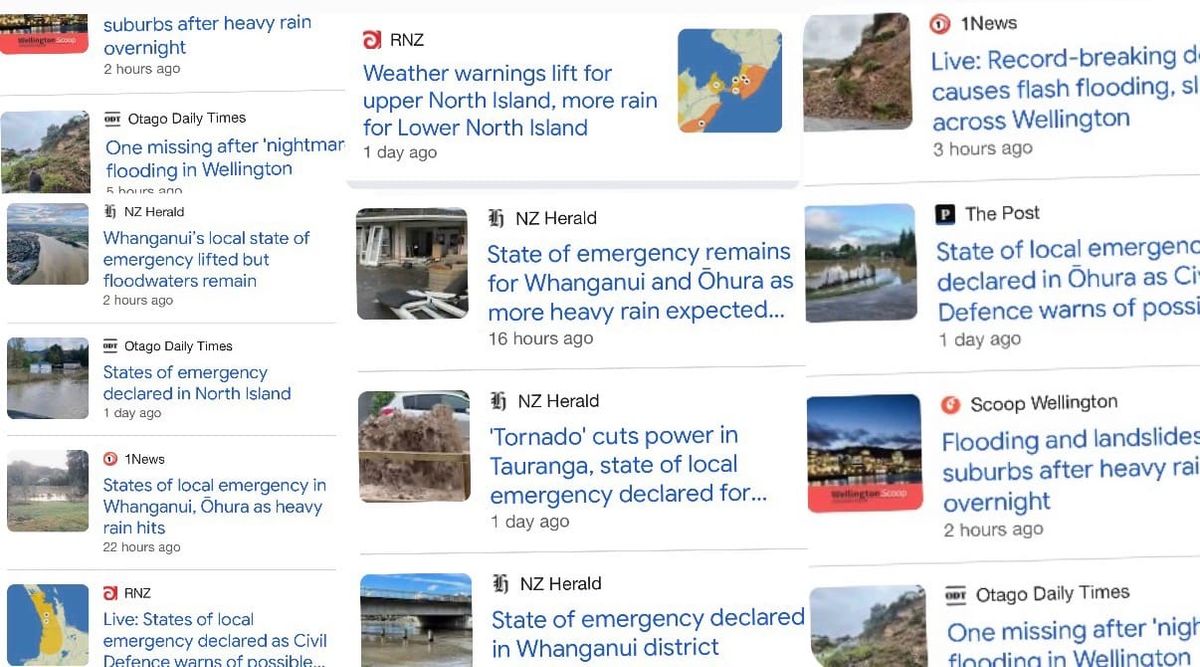
A friend told me that when she hears heavy rain on her roof she almost immediately feels a tightness in her chest and she has to turn on white noise. With a sad smile she said to me "the weirdest thing is I used to listen to rain on my phone to get me to sleep. Now the sound of rain terrifies me".
She'd been forced out of her home by flooding from the Auckland Anniversary floods in 2023. The severe weather event was described as a 1-in-200-year event.
Two weeks later Cyclone Gabrielle hit and it was deadly too. Four people died in the Auckland Anniversary floods. And 15 people died from Cyclone Gabrielle.
Feel free to skip to the comments if you read this already in your email
Last night, I woke to our house shaking. Rain was pouring down and trying to get through our bathroom window opposite my bedroom and my son's bedroom. My little boy snuggled next to me, the cat and dog curled up beside him.
I stared at the window, wondering what to do. I listened to my husband moving around upstairs, monitoring the water cascading down from the house above us. I could smell the damp earth pressing against the side of the house. I could see torch light on my street as we checked banks and retaining walls.
Like many people last night, not just in Te Whanganui a Tara, I lay awake and hoped the bank behind us wouldn't fall down and hoped our house wouldn't flood.
Today, my car - an electric hybrid - is flooded out and I can't drive it. I can't make it to my doctor's appointment, I've had to get someone else to pick up my son from school, a friend is picking up my eldest son. My husband is at our local primary school with a volunteer crew and sandbags; the stream has burst its banks.
And we're the lucky ones. I saw four fire trucks on the road to my son's school. The traffic lights were out, slips covered the road, and I could hear sirens echoing through the city. I saw two homes flooded up to the windows.
I don't want to adapt to this.
I'm sick of hearing that every flood or storm is a "1 in 100 year event" as we're hit again and again.
I don't want to fear the sound of rain. And I don't want my children to fear the sound of rain. I don't want to see more deaths from slips and more livelihoods destroyed (all of the businesses near our home were flooded last night). I don't want people to escape their homes with only the clothes on their back.
What we're facing is a result of political choices.
We are so overwhelmed by the cost-of-living crisis and the genocides and wars breaking out around the world that this government's inaction on climate change is not registering.
Their rhetoric is that we must adapt to climate change. That these weather bombs are inevitable and there's nothing that can ever be done. Adaptation is necessary, of course, but it's not sufficient and it won't stop what we're facing.
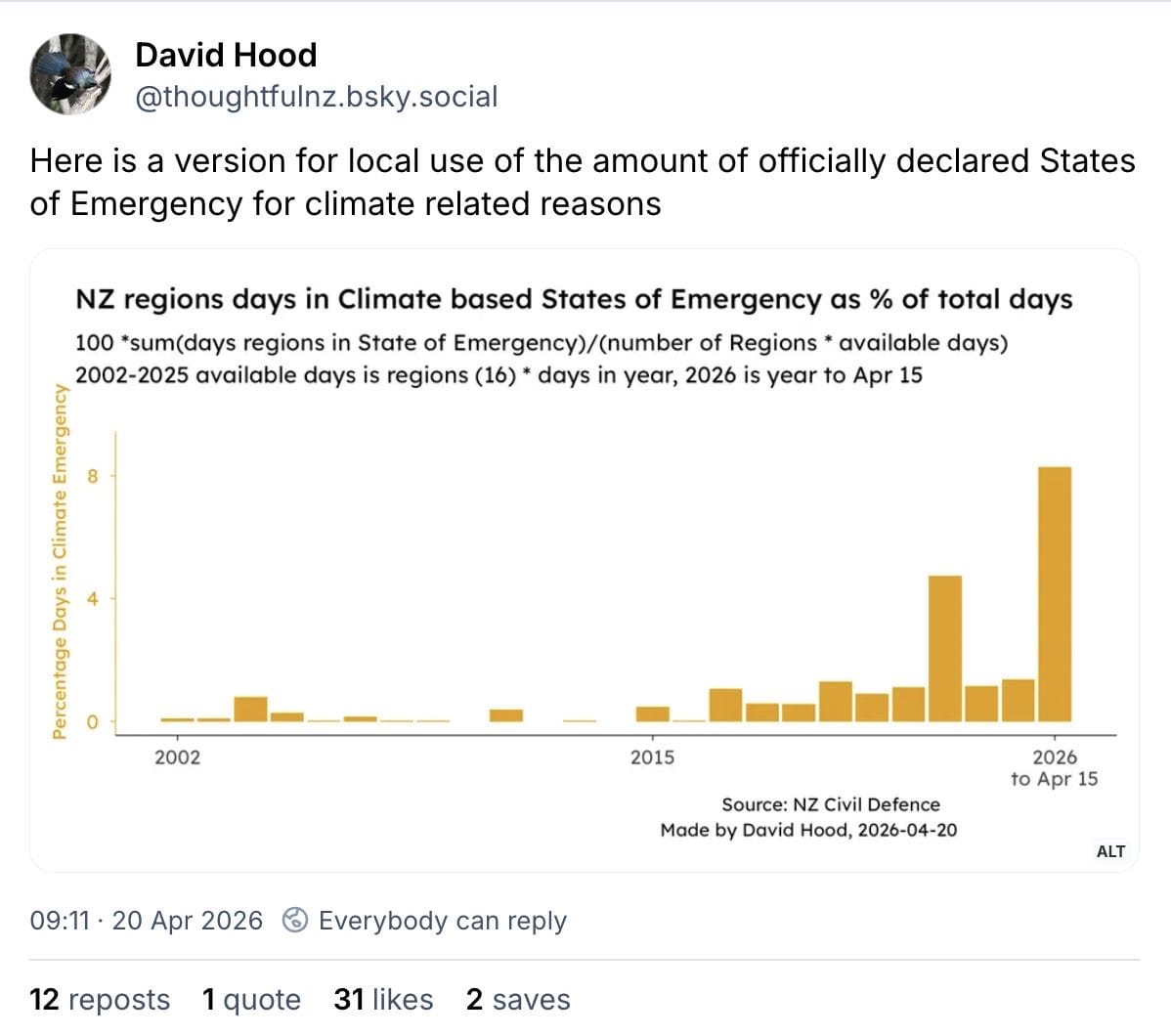
This coalition believes only in making ordinary people absorb the endless shocks of climate change instead of doing anything toward mitigating those shocks.
In February, as Aotearoa faced weather bombs, Climate Denier Shane Jones shut down our country's involvement in a global plan to move us away from fossil fuels. Australia, the UK, the European Union and a group of Pacific nations were among 80 countries pushing for a 'road map' to be included in the formal negotiations at COP30. Aotearoa's negotiating team was considering signing the declaration.
Jones squashed it.
Days after the deadly Mount Maunganui landslip, as families were still trying to recover the bodies of their loved ones, Winston Peters rejected any role of global warming in the flooding.
This government, at the direction of NZ First, has slashed targets for reducing emissions. The government has also scrapped the $6 billion dollar resilience fund created after Cyclone Gabrielle.
In 2023, around 800,000 landslides were caused by Cyclone Gabrielle, making it one of the most extreme landslide-triggering events ever recorded globally.
Meanwhile, the Government did nothing as Fire and Emergency New Zealand was mismanaged to the point that their equipment is breaking and no new fire engine has made it to fire stations in eight years.
Two months ago, Professor of climate science at Victoria University of Wellington, James Renwick, told The Guardian that we must act now.
"To stop such events becoming worse, to stop them overwhelming our abilities to adapt, we must stop adding carbon dioxide and other greenhouse gases to the air," he said, adding that "government and business leaders had to find ways to decarbonise the economy as soon as possible."
Professor Renwick works on climate modelling. He could not be clearer about what we are facing.
"All of this is just going to keep getting worse into the future," he told the Herald.
"We’ll eventually get to a point where we won’t cope with the damage, and it will cost too much to rebuild all the damaged bridges and roads. We’ve got to take stock and think about what we want the country to look like in another 50 years. Because the way it looks now is not going to be liveable."
Earth Sciences NZ published research on the potential impact on New Zealand if the temperature rises by 3C.
The research states that up to 900,000 New Zealanders could be flooded in extreme storms.
If we want a future for our children where states of emergency and people being washed away by flood waters is not the norm, we must vote for parties that will act on climate change.
Donations have been a game-changer since I switched to Ghost. If you can give a koha to the kaupapa, every little bit helps so much.
Thank you!
That means parties that will commit to moving away from fossil fuels quickly, and parties that will reduce emissions. It means voting for parties that value human lives over profit. It means voting for parties that will actually help communities adapt to the horrors of climate change, not just make mouth-sounds about "adaptation" while watching mums and dads and kids and nana and grandpa get wiped out and flooded and wrecked and killed by a crisis that politicians and industry created and worsened and lied about before refusing to do anything meaningful.
It means we must watch how the government ignores those impacted terribly by this flooding and make sure that in November we don't forget how they left communities struggling, under water.
Voting for each other to survive the climate crisis might be the most important thing we do.
Please enrol to vote and make sure your details are correct. And when you vote, remember the rain and each other.
Huge thank you to all of the emergency workers and all of the ordinary folks working together to help others last night and today. I'm so grateful to the firefighters and rescue workers putting their lives at risk to save others.
My kids are safe and were picked up early and are on the other side of town with family where the flooding isn't as bad as where we are.