
Pervert glasses are here - and we're not ready

In October 2024, Hannah Grundy, a teacher from Australia, found sexually explicit videos and images of her online. Some of them appeared to be created from photos and videos that were only available on her Close Friends List; as a teacher, she is very careful with her internet footprint, and there are not many publicly available photos.
When she investigated further, it turned out to be a close friend of hers, someone who worked with her husband. Not only did he share these images that he made (using computer software), he also shared her home address and phone number online.
Feel free to skip to the comments if you read this already in your email!
This was an example of what is called image-based abuse. It’s when sexualised content is created and shared, or there’s a threat of sharing, without a person’s consent.
While this can include secretly taken photos or the non-consensual distribution of private images, emerging technologies have dramatically expanded the problem. Generative AI tools can now create highly realistic deepfake images and videos that place someone’s face onto explicit content they never participated in.
To no one’s surprise, women and girls are disproportionately targeted, making image-based abuse not just a technology issue but a gendered form of violence rooted in misogyny and power. In fact, in Laura Bates’ book “The New Age of Sexism”, she cites research that says that of the 96% of deepfakes that are non-consensual sexually explicit images, 99% of those depict women. In fact, most of the apps, bots and websites that will create deepfake explicit images don’t even work on pictures of men.
Deepfakes can be used to humiliate, silence, intimidate, or punish women for speaking publicly, participating online, or simply existing in digital spaces. From a child protection perspective, these technologies also create new risks for taiohi (young people), as harmful or exploitative images can be generated, shared, and amplified at unprecedented speed, often faster than legal and safeguarding systems can respond.
If you didn’t think all of this was bad enough, cue Meta Smart Glasses - a new form of wearable technology.
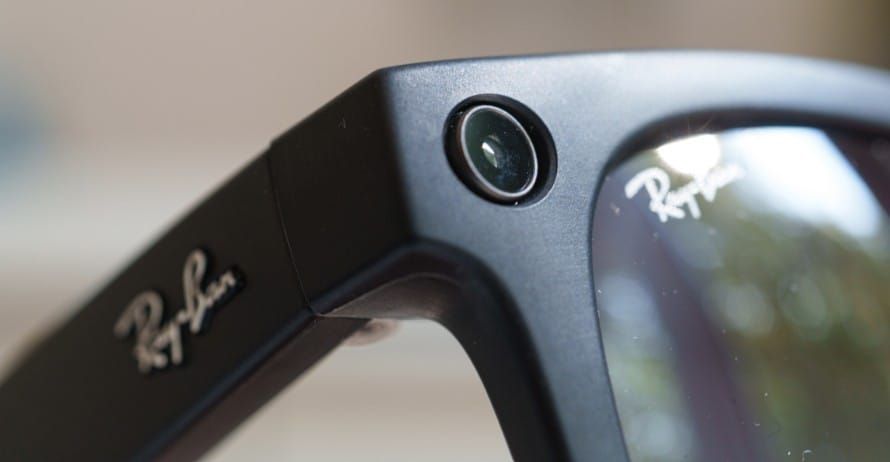
But, just what are Meta Smart Glasses? You might have seen the latest ad campaign from Kylie Jenner - in fact, she is so pro the glasses, she has voiced the AI that it comes with. Smart glasses are internet-connected eyewear that look much like ordinary sunglasses but can take photos and videos, record audio, livestream, and interact with AI using built-in cameras, microphones, and speakers.
The problem is bigger than privacy.
Smart glasses raise real safeguarding concerns for taiohi. These devices make it much easier to record people without their knowledge, including children, and blur the line between offline interactions and online harm. Young people also have a right to participate safely in digital spaces, to express themselves online, and to benefit from technology without being exposed to exploitation or abuse.
What you thought was going to be a private moment can now be captured, shared, stored, or even livestreamed with very little warning to the people being recorded. As these devices become part of everyday life, being recorded without your knowledge could become increasingly normal. Meanwhile, the laws and safeguards designed to protect people are still playing catch-up.
One of the most concerning features of smart glasses is the potential to livestream harm.
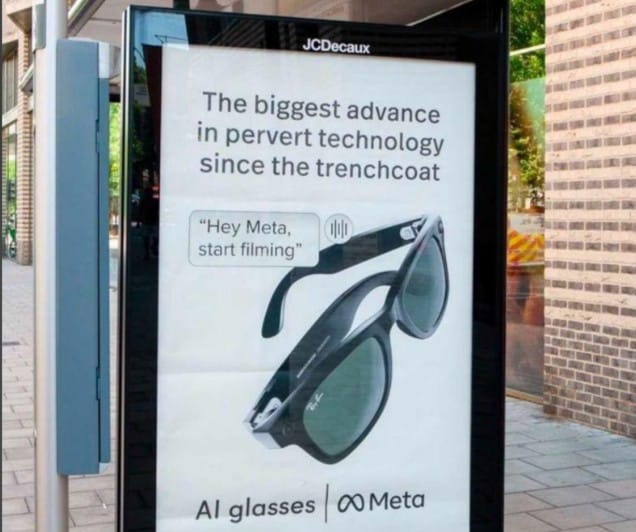
Unlike traditional cameras or phones, smart glasses are hands-free, discreet, and can broadcast video in real-time. This creates serious and very real risks. Harmful content can be captured and shared instantly, leaving little opportunity for intervention.
Livestreamed abuse can be especially difficult to intervene in because harm occurs in real time, and recordings may be copied or redistributed before action can be taken.
As wearable technologies become more commonplace, they risk making covert surveillance and exploitation easier while reducing the visibility of harm to bystanders.
Smart glasses don't exist in a vacuum. They're arriving in a world where women and girls already experience image-based abuse, online harassment, and technology-facilitated violence.
Overseas, Ray-Ban Meta smart glasses have already been used to covertly record women during everyday interactions and post footage online without their consent.
In the UK, women have reported being filmed by men wearing smart glasses while being approached in public spaces, with recordings subsequently uploaded to social media attracting sexualised and other gross comments. Similar “pickup” content has emerged in the US, where men have used smart glasses to record interactions with women in airports, gyms, and other public spaces, often turning those encounters into viral online content.
Smart glasses have also been used to record women working in massage parlours and the sex industry, with footage shared online without their knowledge. While Meta installed a recording light into the frames to show when recording is in progress, it is so easy to modify them.
These cases aren't isolated incidents. They show how technology is repeatedly being used to invade women's privacy, profit from their image, and treat their bodies as public property. Wearable devices create new possibilities for perpetrators to do harm even more secretly than before.
These concerns are not merely hypothetical in New Zealand, either.
Last year, an Auckland man used the Ray-Ban Smart Glasses to covertly record a sex worker without her consent while she was naked. The recording was detected only because the woman noticed him activating the device (by touching the side of the glasses). He pleaded guilty to attempting to make an intimate visual recording, but was discharged without conviction - to the dismay of the brothel owner.
This case highlights a simple reality: cameras are becoming harder to spot, while recording people without their knowledge is becoming easier. While creating new opportunities for nonconsensual capture of intimate images, it places additional burdens on individuals (women and girls) to identify when they are being surveilled.
It leaves a bigger question hanging in the air: are our laws ready for technology like this?
What happens when wearable tech like smart glasses are used to record someone without their consent? Aotearoa’s existing laws may provide some protection, but there are important gaps.
If the recording involves someone who is naked or engaged in a private act (sexual activity or showering, for example), the intimate visual recording offences in the Crimes Act 1961 may apply. However, many of the overseas examples involve women who are fully clothed and in public places, and so it will be out of scope.
The Harmful Digital Communications Act 2015 (HDCA) may provide a pathway where footage is shared online and causes serious emotional distress or where intimate images are shared online without consent. A person can make a complaint to Netsafe, which can work with parties involved (which may be undesirable in many cases), or a person can apply to the District Court for orders requiring content to be removed (if that is possible), restrict further publication (by the perpetrator, it will not stop third parties continuing to share footage or images), or identify the person responsible.
The HDCA also creates offences where someone intentionally causes serious emotional distress through digital communication. However, there are hurdles. A person may need to show that the publication caused actual serious emotional distress and that the defendant intended serious emotional distress, which sets a relatively high threshold.
One limitation of the law is that it tends to focus on what was shared and the harm it caused afterwards. It is often less equipped to deal with the bigger picture: the covert recording, the lack of consent, and the online cultures that encourage this behaviour in the first place.

The risks are even more serious where children and young people are involved.
Aotearoa’s classification laws may apply where footage sexualises or exploits children, including through the Films, Videos and Publications Classification Act 1993, which restricts objectionable publications, such as child sexual abuse material. If the footage falls within scope, it can be subject to removal, including any later re-publication.
However, wearable tech creates challenges that extend beyond clearly objectionable publications. A child may be recorded in a public place without their knowledge, their image may be altered using AI, or shared online in ways that do not meet the legal threshold for objectionable material.
This is particularly concerning because wearable devices are designed to blend into everyday life. A child may not recognise that a pair of ordinary-looking sunglasses contains a camera. They may not realise they are being recorded, and will have little ability to control what happens to that image/footage afterwards.
Ultimately, wearable technologies such as smart glasses do not create entirely new forms of harm; rather, they amplify and extend existing patterns of gendered violence, exploitation, surveillance, and control over women and girls.
Consent becomes much harder to meaningfully give or refuse when recording devices are hidden inside objects that look completely ordinary.
Too often, we're told that women and girls should simply be more careful, more alert, and more aware of their surroundings, remain vigilant, and constantly assess whether they are being recorded, instead of placing responsibility on those who design, deploy, and profit from technologies with foreseeable risks of misuse. The same is true for children and young people, who should not need levels of technological awareness beyond their developmental capacity simply to protect themselves from covert recording.
If safety, privacy, and consent are to remain meaningful in the age of wearable technology, instead of expecting people to protect themselves from every new technology, we should be asking more of the companies that design, sell, and profit from them.
The concern is not the existence of wearable technology itself, but whether adequate safeguards, accountability mechanisms, and rights protections are built into its design and deployment.
Vivian Chandra is a digital safety educator and advocate with ECPAT Child Alert, where she helps develop programmes that support children, young people, and the professionals who work with them to navigate an increasingly complex online world. With a background spanning technology, education, and community engagement, she is passionate about promoting children's rights, online safety, and digital equity. Vivian brings a practical, human-centred approach to emerging issues such as AI, deepfakes, image-based abuse, and online exploitation, helping communities respond to challenges while empowering young people to thrive safely online. Follow Vivian on Instagram or Linkedin.
Dr Cassandra Mudgway is a law academic at the University of Canterbury, Faculty of Law. She researches and writes about online abuse, online gender based violence, and international human rights law. Her current projects include mapping New Zealand’s legal frameworks in response to technology-enabled gendered harms, including via social media and AI tools. She shares updates on local and international issues related to technology and gender over on her Instagram. Or find her on LinkedIn.