A list of (almost) every government attack on Māori and Te Tiriti

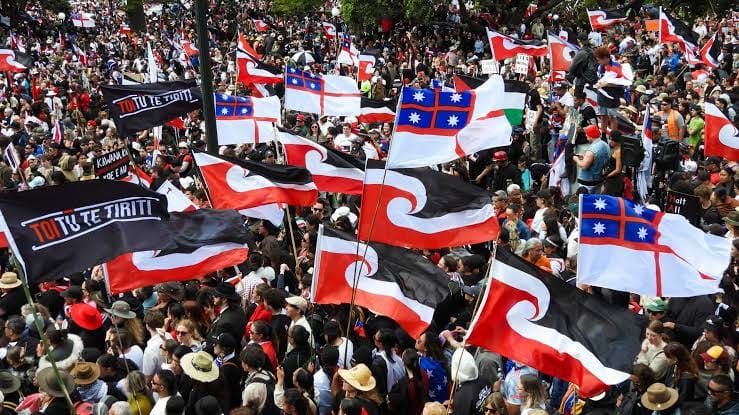
Not too long ago I was discussing the government and their attacks on Te Tiriti with a group of people. One of them said I know there's been the Treaty Principles Bill, but has there really been much else?
One of the things this Government does is 'flood the zone'. They put so much BS out there that it's hard to keep up. They push nearly all legislation through Parliament under urgency. They make outlandish statements to get the media to cover the Real Prime Minister randomly calling someone the R-Slur instead of actually talking about the racist legislation they're putting through.
Back in May, I talked about this:
"This coalition government is all about 'flooding the zone.' Winston Peters and David Seymour are experts at this political strategy. The strategy comes from Donald Trump's former chief political strategist Steve Bannon, who said: "The Democrats don't matter... The real opposition is the media. And the way to deal with them is to flood the zone with shit". So, it's up to us, as people who care about each other, to provide that analysis and speak out."
A group of people have done just that, pulling together a list that isn't exhaustive, but does demonstrate the enormously racist attacks this government has made against Māori and our country.
After this list, you'll read advice from Jen Margaret from Groundwork: Facilitating Change Tiriti Action Group, and writer and Te Tiriti advocate Michaela Keeble, on how to discuss this with your friends and family.
Feel free to skip to the comments if you read this already in your email!
Government attacks on Te Tiriti and equity for Māori, 2023–26
This list is not exhaustive, but demonstrates the collective, destructive impact of the government’s actions on Māori, on the relationships between Māori and the Crown, and on Aotearoa as a whole.
Direct attacks
Limiting the constitutional role and impact of Te Tiriti o Waitangi
Carrying out a review of Treaty clauses in legislation to remove, replace or redefine the influence of Te Tiriti across 19 pieces of legislation (as demanded by NZ First in the Coalition Agreement.)
Introducing – under urgency in the last week of Parliament – bills to weaken Te Tiriti o Waitangi obligations in legislation.
Introducing the harmful and widely publicly opposed Treaty Principles Bill.
Pushing to weaken the Waitangi Tribunal and largely ignoring the Tribunal’s findings.
Rolling back Māori rights and involvement in local government and environmental protection
Pushing through controversial Marine and Coastal Area law changes, retrospectively eroding Māori rights to customary marine title, leading to a Waitangi Tribunal inquiry and raising concerns about the constitutional balance between Parliament and the Judiciary.
Forcing a referendum on Māori Wards in local government, despite widespread opposition from Māori and councils.
Reforming resource management legislation to restrict tangata whenua involvement.
Cutting initiatives aimed at improving Māori health outcomes
Disestablishing Te Aka Whai Ora – the Māori Health Authority, sparking a major Waitangi Tribunal hearing.
Removing health leaders who support cultural safety, Te Tiriti and equity from statutory health councils, including the Medical Council and Nursing Council.
Removing requirements for “respectful interaction with Māori” in cultural competencies in its new health regulation bill.
Scrapping the lowered bowel cancer-screening age for Māori and Pasifika (who face a higher risk of bowel cancer at a younger age than other New Zealanders.)
Halting proposed access to rongoā Māori services in prisons.
Reversing the life-saving decision to prioritise type 2 diabetes medication for Māori and Pacific peoples (who face higher risks from type 2 diabetes than other New Zealanders.)
Attacking te reo, Te Tiriti and local histories in the education system
Removing Aotearoa New Zealand histories as a standalone subject.
Rewriting the New Zealand curriculum to demote Māori knowledge and content, local curriculum, Aotearoa histories and Te Tiriti.
Cutting funding for te reo Māori training for teachers.
Scrapping Te Tiriti o Waitangi obligations in the Education Act, despite opposition from more than a thousand schools across the country.
Removing Māori words from early-reader books for children.
Diminishing the status of te reo in public life
Requiring government agencies to prioritise English over te reo Māori in their names and communications, sparking an urgent Waitangi Tribunal inquiry.
Redesigning passports so English appears before te reo Māori.
Ditching bilingual road signs.
Rejecting a joint application from iwi and council to correct te reo Māori place names.
And a whole lot more ….
Removing the responsibility of Oranga Tamariki to work in partnership with iwi and hapū and keep Māori children in state care connected to their whakapapa.
Cutting funding for pre-sentencing cultural reports which give more context to offending and help address the drivers of crime.
Removing funding from Whai Kāinga Whai Oranga which was established to address chronic shortfalls in Māori housing.
Sudden cancellation of research funding including the He Tipu Ka Hua Māori research initiative, and progress towards co-governance in research, such as developed through the National Science Challenges.
Ending the fund providing support for climate resilience projects for marae – while marae are increasingly providing critical community infrastructure during severe weather.
Weakening of Māori and Te Tiriti capacity and capability across the public sector.
Avoiding their statutory responsibilities to protect taonga - including going to court to argue against protecting one of the most significant archaeological finds in New Zealand.
Making budget cuts to Māori programmes.
Attacks which amplify inequity for Māori
The following government actions are not specific to Māori, however their impacts will be disproportionate for Māori, as they amplify existing inequities. They make things worse for those already experiencing tougher conditions while further benefiting those who are already in advantaged positions.
Health
Restricting employment of front-line health workers as a result of budget cuts.
Cutting funding for disabled New Zealanders and their carers without consultation.
Rolling back smokefree legislation which public health academics say goes against evidence, tarnishes our international reputation, and risks lives. At the same time giving $200+ million in tax cuts to tobacco companies.
Income and social support
Introducing ineffective and punitive money management for those receiving income support.
Changing the rules so that welfare levels are indexed to inflation rather than wage growth, effectively reducing increases to income support.
Repealing Fair Pay Agreements impacting sector-wide collective bargaining.
Scrapping pay equity claims for thousands of workers under urgency.
Justice
Scrapping prisoner reduction targets and introducing law and order policies resulting in a record high prison population and skyrocketing costs.
Banning prisoners from voting through the Electoral Amendment Act.
Housing
Allocating $2.9 billion in tax breaks for landlords while also:
Scrapping the construction of thousands of state homes and selling off state houses during an escalating housing crisis.
Tightening access to emergency housing grants leading to increased homelessness, while cutting funding from frontline services providing critical support for families living in emergency housing.
Introducing no-cause evictions for renters.
Announcing they will legislate Move-on Orders giving police extra powers to move on, fine and imprison unhoused people as young as 14 years old.
Care and protection
Cutting Oranga Tamariki’s early intervention services intended to protect children and keep them out of care.
Spending millions on military-style bootcamps for young people, despite international and local evidence showing they don’t work.
Voter suppression
Ending same-day voter enrolment making it harder for people to vote and likely depressing Māori voter turnout.
Scrapping the Electoral Bill to lowering the voting age.
And more …
Passing the Regulatory Standards Bill, making it harder to pass regulation in the public interest, despite overwhelming opposition.
Slashing funding for free school lunches and removing contracts from local providers, leading to poor quality food and significant waste.
Promoting a Conservation Amendment Bill that would fundamentally shift the purpose of conservation towards economic development.
Reversing a ban on oil and gas exploration while climate-related disasters are on the increase.
So what next? You need to Vote for Te Tiriti.
What does it mean to vote for Te Tiriti? What would you say if someone asked you why you're voting for Te Tiriti? Would you vote for Te Tiriti?
I'm hoping we can answer some of those questions before the General Election on 7 November. More importantly, I'm hoping we can answer these questions before enrolment closes at midnight on 25 October 2026.
Jen Margaret is Pākehā and works for Groundwork: Facilitating Change. Groundwork offers affordable workshops on Te Tiriti. As a Te Tiriti Educator and member of Tiriti Action Group I knew approaching Jen and Michaela Keeble was a good idea.
Michaela is a Pākehā writer and Te Tiriti advocate who supports Groundwork too. Together, they've created a really cool guide for talking about Te Tiriti.
It's been so useful for me, and I know it will be useful for you too.
Arohanui Emily
Feel free to skip to the comments if you read this already in your email!
How to talk about Te Tiriti - Your Guide
Where do you start if the person you’re talking with doesn’t have a basic understanding of Te Tiriti or all the ways it’s been breached by the government in the last three years?
What if the person does know, but they have given up hope that the electoral system will ever deliver the just society envisioned in Te Tiriti? How do you talk to people who feel, reasonably, that voting is a waste of time?
Being responsive to where the person you're talking to is at is really important.
Here are some tactics to draw from:
Tactic 1: Get across the basics
Outlining the context for Te Tiriti, what its articles say and what that means today takes a bit of unpacking. If you’re up for spruiking it, Groundwork's Te Tiriti Explainer is a free, handy resource for discussions.
Print a few copies out, keep them in your back pocket, and at the sideline or in the office, pull them out and let your mates know that Te Tiriti is about all of us, and it’s not too difficult to get your head around.
Tactic 2: Remind each other what has happened over the last three years
The list of Te Tiriti breaches in the last three years is long. So long we can begin to numb out and forget the details.
That’s exactly the government’s plan: to overwhelm us with direct attacks on Te Tiriti and Māori rights and indirect or less visible attacks, law changes which impact Māori inequitably.
Despite the sheer horror of it, it’s helpful to remind each other of the specific and deliberate harms committed by this government. We’ve gathered a list together here and it’s repeated above.
This list reminds us that while we continue to work for long-term transformative and constitutional change, we also need to use our vote to stanch the flow immediately.
Tactic 3: Infographics for the win
For the conversation buddy who supports Te Tiriti but is still considering a vote that may not do anything for Te Tiriti, direct them to this great resource at Vote for Te Tiriti.
An at-a-glance scorecard of all parties’ policies in relation to Te Tiriti. The green ticks speak for themselves. ✅
Tactic 4: Remind each other of the great work for Te Tiriti that endures and grows
Amidst the Te Tiriti attacks, work led by iwi/hapū and Māori organisations around the country to enact Te Tiriti continues.
Here are just a few recent examples of many transformational projects. Sharing real-world examples, and reminding your team, office, hiking or dance-floor mates that a supportive government can amplify this work, is a way to appeal to those among us who “only want the good news.”
By voting for a government that will transfer resources and create supportive legislative settings, Māori can get on with this work rather than fighting negative fires.
Tactic 5: Lean into our shared values
When people aren’t keen to learn or hear facts, it’s time to switch it up. Move the conversation towards the kind of country your buddy wants to live in.
Lucky for all of us, Dr Carwyn Jones has recently provided a reminder about the genius tactic of focusing on the values of Matike Mai Aotearoa, not just on the structural models it provides.
Values like community, belonging and protecting Papatūānuku are not just for Māori, they underpin the kind of society that’s healthy, cohesive and future-proofed for all of us.
Tactic 6: Do it for the practice, even if you don’t think you can change their mind (or their vote)
Bringing Te Tiriti and the values of Matike Mai to life is ongoing work, regardless of who is in government. The election gives us all an opportunity to build our talking muscles - muscles we will need even more once we have a constitution with relationality at its core.
Tactic 7: Lead with questions and curiosity - not answers - and have good answers ready for common questions
Right now, conversations about voting are a vital way we can show up Te Tiriti. Yes, it can feel tricky, especially when we spend so much time trying to avoid conflict with family, friends, coworkers, dog walkers, and others.
To help, we’ve created a special Vote for Te Tiriti edition of our conversation guide. As with the Te Tiriti explainer, the more of us who are equipped for productive conversations about voting for Te Tiriti, the better.
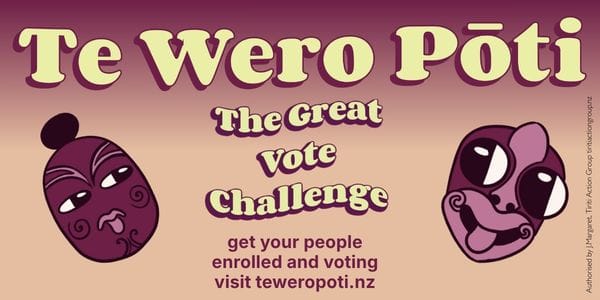
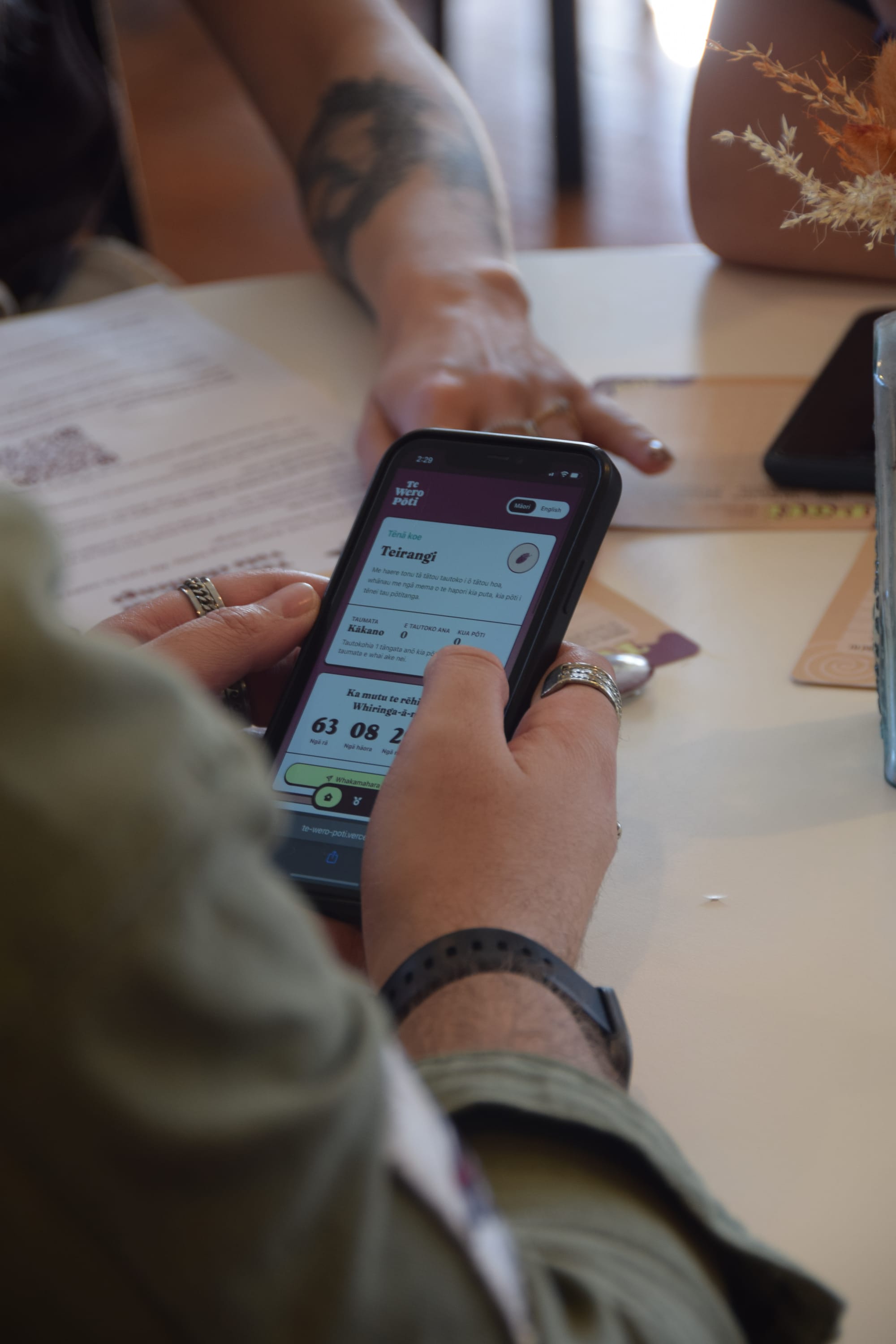
Download Te Wero Pōti, share it with mates, and you could set up some personal challenges for the number of Te Tiriti chats you’ll have in the lead-up to November 7.
You can also fill out this form to request helpful stuff here. Tiriti Action Group - Pōneke wants to support you to actively enrol your networks and your network’s networks, too.
- If you want to host an election stall and need resources, or volunteer to staff one, please use this form.
- If you want to print your own star charts, posters and other election resources, go here