
Three minutes: It’s dangerously easy to get weight loss drugs
Please take care reading this piece: It talks about weight, weight-loss and fatphobia. I use the term ‘fat’ throughout because I view the term as a descriptor. You might disagree; that’s OK.
When a friend told me you can get the weight-loss jab online within minutes, delivered to your door without oversight, I was sure it couldn’t be correct. I was wrong.
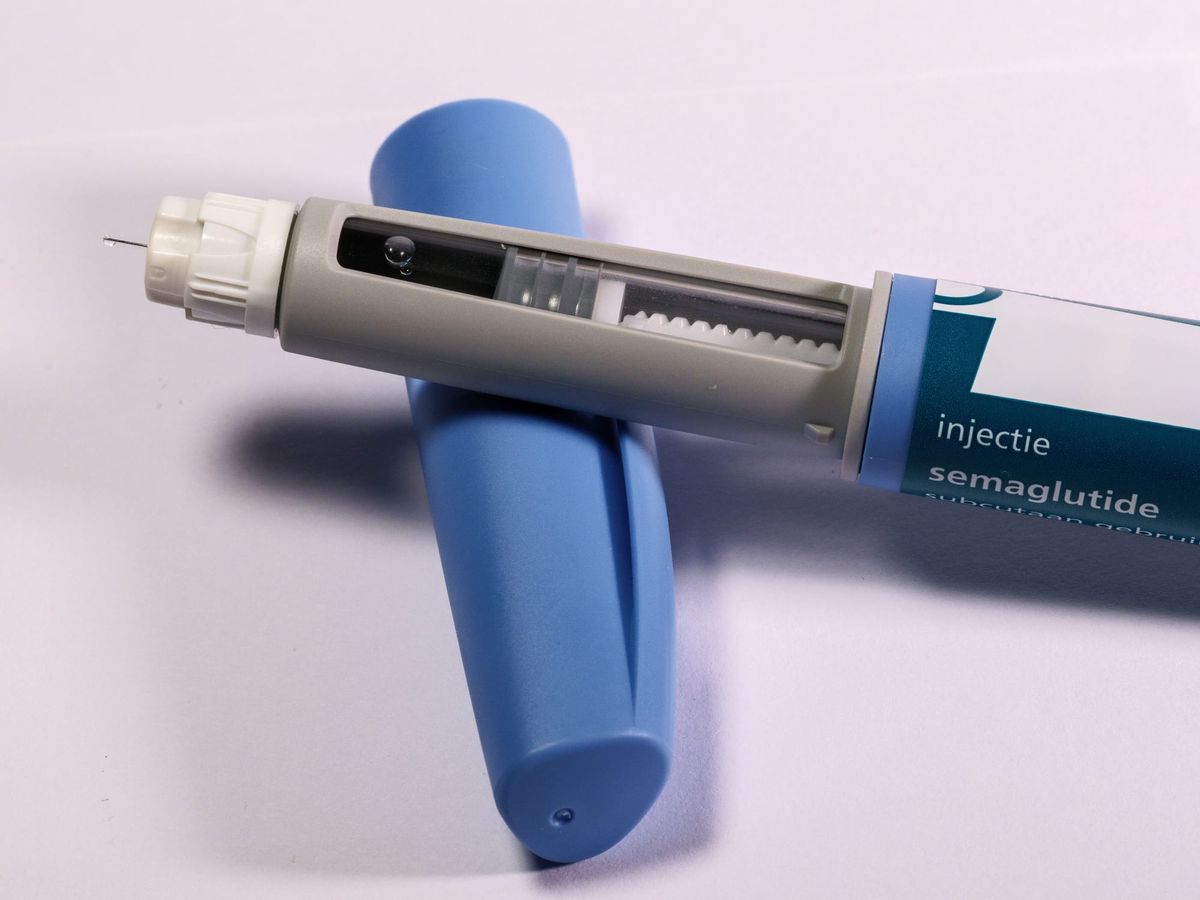
You’ll have almost certainly heard of the weight-loss drugs Ozempic, Wegovy, or Mounjaro. They’re GLP-1 agonists, a class of medications that can help manage Type 2 diabetes. They usually cause you to lose weight rapidly by making your brain think you’ve eaten or you’re satiated.
Marketing pushes them as shutting down ‘food noise’ as in, you no longer think about being hungry or wanting food. Shots of women shown before and after these weight loss injections are all over social media. The pressure on fat people to take them is immense.
Once on them, to maintain or continue weight loss you have to be on this medication for life. Studies show GLP-1s frequently cause digestive issues like nausea, vomiting, diarrhoea, and constipation. More serious risks include pancreatitis, gallbladder disease, and severe dehydration-related kidney injury.
Eating disorder experts have sounded the alarm that GLP-1s can be harmful when not used for their intended purpose, when inadequately monitored or monitored by clinicians without eating disorder expertise, or when used for weight loss motivated by weight stigma or fat phobia in people with eating disorders.
As someone who struggled through the pressure to get weight loss surgery when it felt like everyone was getting weight loss surgery - I’m definitely feeling the pressure to hit the Ozempic.
The fact that it seems easier than having risky surgery doesn’t help. But I’ve always thought that I’d be unlikely to qualify. Yes, I’m a chunky lass, but I’m healthy. I am a vegetarian. I exercise most days and do at least four solid work-outs a week.
I can’t imagine a general practitioner would look at me and suggest I need a weight-loss drug even though I’m overweight.
Now is the time you hold my face and say ‘oh you sweet summer child’.
I began to see stories about how easy it was to get GLP-1s a few months ago. When I asked a friend about it, I started getting targeted ads. The ads implored me to think about my children, to ‘make healthy choices’, to ‘take control of my life’.
All of the ads suggested that in just three minutes I could order GLP-1s and have them delivered to my door. Surely not? Not in Aotearoa right?
I clicked through to the ad I was seeing most. The website had a New Zealand domain name and told me I could do a ‘quiz’ to see if I qualified for an injection I would likely have to stay on for my entire life.
The first thing I was asked was about my goals - Did I want to ‘look and feel like myself again?’ It's a strange question given arguably, my most ‘self’ I’ve ever been is fat.
Did I want to ‘get on top of my health before it becomes a problem’? Did I want to ‘stop feeling controlled by food’? Did I want to ‘keep up with my life, my kids, the things I love’? Hmmm literally, all things I can do now even though I’m overweight.
And finally, had I ‘tried everything and nothing stuck’?
I really had no idea how to honestly answer this so I just went with the first nonsensical option of wanting to ‘feel and look like myself’.
I was then asked: ‘What’s got in the way before?’
- My body didn’t respond to diet and exercise alone
- I couldn’t stay consistent when life got busy
- I couldn’t stop the cravings no matter how hard I tried
- I never found something I could actually stick to long term
- I didn’t have the right medical support behind me.
The only one that made sense for me was the first. I have a good diet and I exercise regularly and neither are going to make me a size 8 because I am a mother of two with a tummy that hasn’t been flat since I was a teenager and I have always been on the rounder side.
The smallest I’ve been was when I was pregnant with hyperemesis which made me vomit constantly and when I was breastfeeding round-the-clock. Oh and when I had organ failure I lost heaps of weight. Other than that, I’ve always been the size I am.
I was asked my gender (two options, so not much info there). And then I was asked if I was pregnant, breastfeeding or trying to conceive.
I was asked if anyone in my family had thyroid cancer or Multiple Endocrine Neoplasia. I was asked if I’d had lap-band surgery, sleeve gastrectomy, roux-en-y gastric bypass, or a gastric balloon. And I was asked if I was currently using prescribed weight loss medication.
I guessed my height (my husband told me I was off by 7cm). And I guessed my weight because I don’t have scales.
I was asked if I have any so-called ‘weight-related issues’, which ranged from joint pain to high blood pressure, asthma to COPD, sleep apnoea etc. There were some that I cannot figure out how you could claim they’re weight-related - like endometriosis and ‘diagnosed mental health condition’ and ‘reduced libido’. I have once tested positive for high cholesterol, so I picked that one, and I used to have endometriosis before I whipped out my uterus.
I was asked if I had type one or two of diabetes, pancreatitis, gallstones, or again thyroid cancer. I have had pancreatitis, and I’ve had my gallbladder removed, so I ticked them. I explained in the comment box that I'm now gallbladder-free. I was then asked about medication - mainly diabetes medication. I am not on the meds they listed.
I was absolutely sure I wouldn’t qualify based on the limited info I’d provided.
I finished the quiz at 8.10 pm. At 8.19 pm, an email landed in my inbox telling me I had a personalised GLP-1 weight loss treatment plan…recommended by your [redacted] practitioner. I was told my treatment will be “delivered straight from the pharmacy to your doorstep, quick, discreet, and hassle-free”.
It’s hard to explain to someone who isn’t fat what it’s like to be fat. There are different levels of fat, right? Some folks call them ‘fategories’. Fat activists have come up with labels because even within the community of fat people there are levels of privilege. I’m what would probably be described as a small fat. I face fatphobia, for example, but I don’t struggle with access issues in the way someone fatter than me would.
I’m not shut out of life in the way other fat people are. Still, I struggle to even talk about this because of internalised fatphobia. I feel ashamed sometimes (not all the time) about my weight even though I know this is just my size.
Being fat can feel like a moral failure. Especially when you have something like weight-loss jabs shoved in your face. The read-between-the-lines is ‘how could you stay fat when you could easily be thin with this injection?’.
How dare you be fat. How dare you take up so much space.
"I am just so worried that my daughter is going to hate her body as much as I hate mine."
My friend Abbey Suyker-Harrison is a social worker and podcaster (Dumb Smart Mums). She has also been served constant ads for GLP-1s.
Within six minutes of being served an ad on Instagram, Abbey had a ‘weight loss plan’ for Wegovy.
“It’s truly terrifying on so many levels. It’s so unregulated. Like, I could have been completely lying on those questions, and who is gonna notice? The teenager at Chemist Warehouse when I go to pick it up?”

The cost for Abbey was around $479 per month for the GLP-1s. It’s not money she has, but she does wonder if she was flush, whether she’d end up on the jabs.
“The clinic I was targeted by offers Afterpay for their treatments and it made me heartbroken to think about the people who will put themselves into debt in order to not be fat.”
“And it was tempting. I feel like I have worked so hard to be okay with being fat. And yet, the idea of just clicking a button to help me lose weight? If I had that money in my account, we would have been in trouble,” she says.
Abbey is a mum to an 18-month-old daughter and as we chatted, she talked about the future she hopes for.
“I just keep thinking, ‘surely we are past this?’ I am just so worried that my daughter is going to hate her body as much as I hate mine because we’re not gonna have moved on by the time she is old enough to understand the cultural expectations of bodies, and it’s going to continue in a cycle like this forever.”
“I actually just think there is no way to exist in a femme body that is ‘correct’.”
Both Abbey and I can understand the lure of GLP-1s. When being fat is seen by so many as a moral failure, and ‘everyone is on them so why aren’t you’ is becoming a common refrain - it all feels bloody hard.
“I don’t expect any one individual to be able to fight off a lifetime of being told: “you need to be skinny to not be a bad person”. The same way I don’t think it’s a moral failing to be fat, I also don’t think it’s a moral failing to be on a GLP-1.”
“GLP-1s are just a symbol of a waaaay bigger cultural issue. The fact that they’re proven to be maybe not great for you and yet they’re getting prescribed left, right, and centre? And there are clinics popping up to sell them at a profit, preying again on an already shit-on portion of the population? That we both could access those clinics without even talking to a real human? That’s fucked up.”
“Why are we so terrified of fatness, to the point that we’re willing to pay heaps of money to inject ourselves with something that’s not great for the large majority of us?”
“But also, if I had the money, would it be so easy to stay so resolute in my Body Positive Morality? Almost certainly not. It’s easy for me to say I wouldn’t take them when I don’t have the disposable income for that to be an option. I actually feel nervous for when they become more regularly available legally.”
Being bombarded with ads for GLP-1s on every social media platform and web page makes fatphobia even more inescapable.
“Since these GLP-1 clinics have popped up in Aotearoa, it’s honestly every third or fourth ad that I get served. Since I got sent the treatment plan from the clinic, they have sent me nine follow-up emails over the space of 14 days with emails like “You’ve already come this far, Abbey!” and “Hey Abbey, questions are totally normal!”. It’s such a mind fuck.”
As a social worker, Abbey has seen the harm fatphobia causes.
“I’ve worked with girls as young as eight telling me how ugly they are because of their fatness. I now work with mums in the perinatal space, and the amount that weight gain comes up is alarming. And this is with newborns and during pregnancy! This myth about fatness being a moral failure is so pervasive, and has its grip on every aspect of our lives. I would just love for it to stop.”
A GP speaks out about GLP-1s
New Zealand is one of very few countries where direct-to-consumer drug advertising is allowed. (Another is the United States.) In many countries, including Australia, this kind of advertising would be illegal.
Dr Beth Shore, a specialist GP and Breastfeeding Medicine doctor, has concerns around GLP-1s being prescribed online by online quiz.
“As you note, there’s no way of verifying someone’s height and weight, so people may put in incorrect information either accidentally or intentionally. Informed consent is a critical part of the prescribing process. If you’re simply filling in a quiz, how can the prescriber be sure that you understand the potential risks and side effects of the medication?” Dr Shore says.
“And how are you supposed to ask any questions you have to make sure the medication is the best option for you? I’m also concerned that there was nothing in the quiz you took to screen for disordered eating, because these medications work by suppressing appetite, which could be incredibly dangerous for someone with a history of an eating disorder.”
Dr Shore is often asked if she’s ‘pro’ or ‘anti’ GLP-1s. She says she’s neither. It’s simply not that black and white.
“As with all medications, GLP-1s have a role for some people. There are a group of conditions for which there’s promising data around long-term health outcomes. I’m also a big advocate for bodily autonomy, and if people are well informed and supported around the use of GLP-1s, I think they are a completely reasonable thing to use.”
“But there are significant potential risks with GLP-1s, including loss of bone density and muscle mass, and side effects like nausea, diarrhoea and pancreatitis. Once started, they generally need to be continued long-term, if you stop them, there’s a high likelihood that any weight lost will be regained, and most of that will be fat rather than regaining the bone and muscle mass that was lost. Repeated weight loss and regain is called weight cycling and is associated with worse health outcomes than simply staying at your initial ‘increased’ weight,” she says.
I wanted to know how a doctor handles the pressure their patients are facing to lose weight - it’s not a new problem. But GLP-1s are fairly new.
“Personally, I take an approach of curiosity,” Dr Shore says. “Why does someone want to start the medication? What are their goals? If their goal is ‘getting healthy’, we generally have a conversation about the common misconception that weight is a good indicator for ‘health’. There are studies showing that lifestyle factors such as how often someone exercises, fruit and veg intake, smoking status and alcohol intake are actually much more significant factors in terms of health than weight.”
“If someone’s goal is to do with how their body looks or feels, I take the time to discuss having a goal that focuses on how they feel rather than the number on the scale.”
With so much societal pressure to have bodies that look a certain way, Dr Beth tries to reinforce with her patients that the number on the scale tells her ‘essentially nothing’ about their health.
“Whilst I will absolutely support them if GLP-1s are what feels like the right choice for them, there are ways to improve health without taking medication to change the shape of their body, and in fact we can improve health indicators without changing the number on the scales at all,” she says.
Her advice to people considering GLP-1s is to consider what they really want.
“If your goal is to ‘achieve’ a certain number on the scale, consider what you expect to be different when you hit that weight.”
“Make sure you have a conversation with a trusted health professional and that you have a good understanding of the possible side effects and long-term risks of the medications, including the fact that to maintain any weight loss you ‘achieve’ you will likely need to continue the medications long term.”
“If you decide that a GLP-1 is the right option for you, the ideal person to be prescribing these for is your GP or a doctor who specialises in weight management, but please let your GP know that you are taking them if they aren’t the one doing the prescriptions - it’s really important that we know what medications our patients are taking!”
She also has a warning about ‘black market peptides’.
“These are untested, and there’s no way of knowing what you are being sent, which makes them incredibly dangerous!”
“Most importantly, please know that weight is morally neutral and not a particularly good indicator of health, and there are plenty of ways to improve your health without losing a single kilogram.”
Are you concerned about GLP-1s? How do you deal with weight stigma? Do you believe we need more regulation around online clinics selling GLP-1s?