
What to do if you're afraid of whatever the Hell is going on in the world...
AKA how to build community


AKA how to build community
Every day you wake up and see the news, and there's a new horror. We're on the brink of another war. Genocide continues unabated. I get it, it's scary.
What can we do to make sure we look after ourselves so we can look after each other? What should we do to help manage the fear so that we can help?
I don't have all the answers, and some of you might think I have no answers...fair. But I do know what it's like to be a very anxious person living through this while trying to support my community. From that perspective, I can tell you what I think may help you.
Feel free to skip to the comments if you read this already in your email!
I'll also share wisdom from Bex Silver AKA The Systems Therapist on Instagram. What is a Systems Therapist? I'll let Bex tell you:
Bex: Kia ora Emily, thank you for having me, and I absolutely love your focus here.
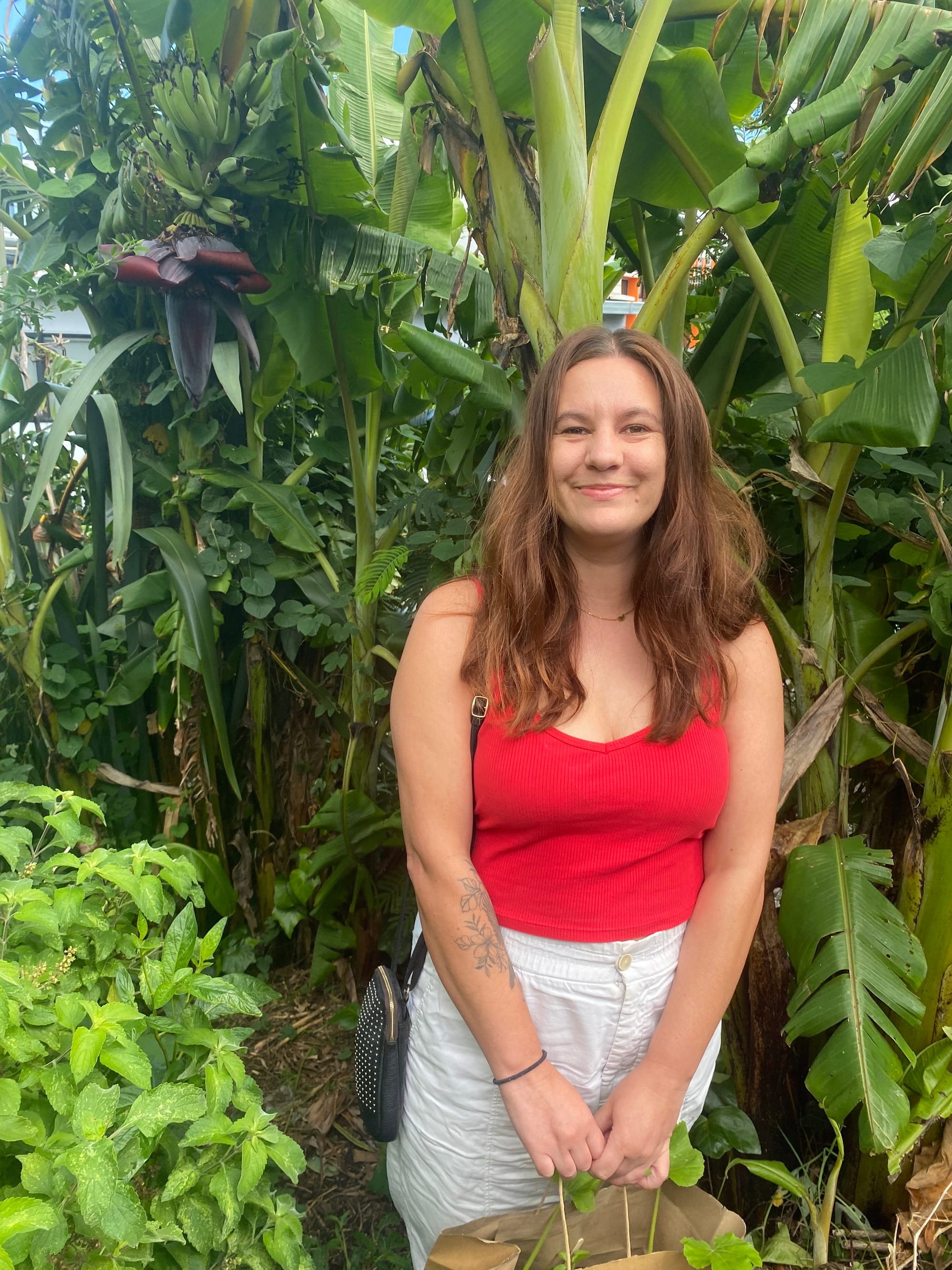
So when people think of therapy, they often think of it as a neutral space to talk about their problems and learn skills to help them cope. A systems approach to therapy understands that wellbeing does not exist in a vacuum - it is shaped by the systems and structures we find ourselves in.
Wellbeing is political, and so therapy should be too! Eurocentric therapy often frames mental health challenges such as anxiety, depression or trauma as individual experiences. This minimises the impact of colonialism and capitalism and disconnects us from an ecology of care. We should not be taught to simply adapt to the world being on fire.
We deserve therapy that acknowledges our oppressive structures and helps us navigate it in ways that include community care.
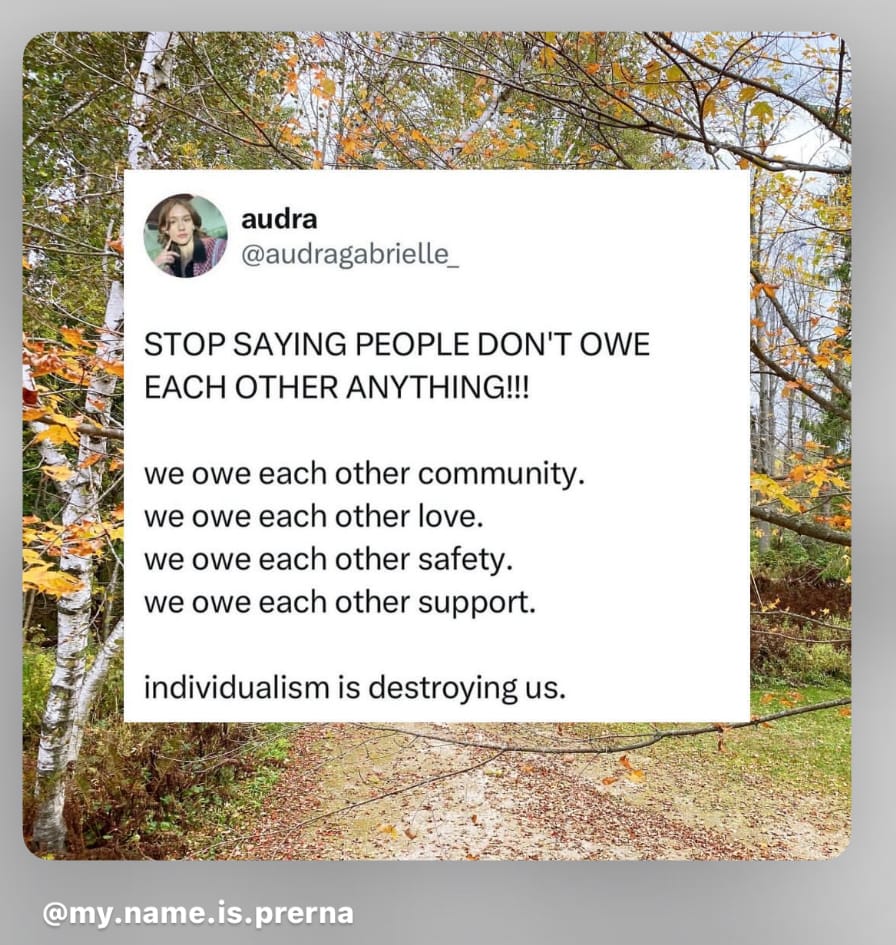
Emily: I really love that. I think that approach has always been needed, but it's especially needed now. Look, I'm gonna get straight to the point. I'll say it till I'm blue in the face, but I'm convinced the only way we are going to survive whatever happens next is if we're in community with each other. I think community is the main antidote to despair. We need each other to help us through the horrors of tomorrow as well as the horrors of today.
Bex: Yes, yes yes! We have been programmed to believe that we are responsible for our own wellbeing rather than seeing it as a collective responsibility. We are taught to self-regulate rather than co-regulate, and to pursue self-care rather than collective-care. We are living in a world of constant exposure to suffering, genocides and execution live-streamed on our phones.
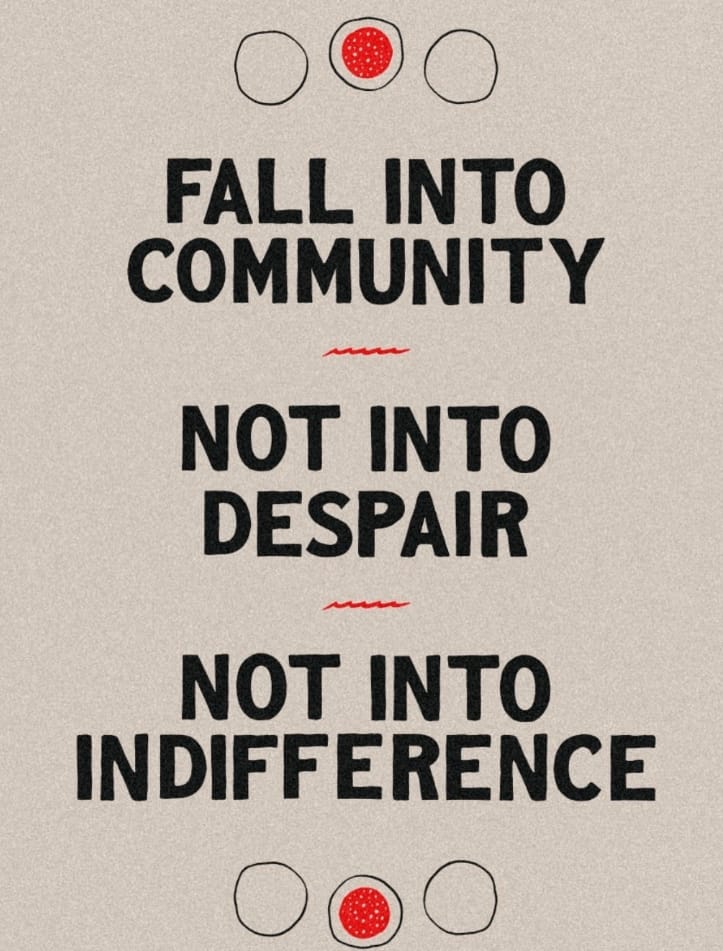
Bex: Our bodies and nervous systems were not made to cope with this constant trauma. The good news is that we don’t have to go through this alone! We can find community in so many different ways, whether it’s a group of like-minded friends, your workplace, neighbourhood, interest groups or volunteer networks.
But we need to be intentional about using these communities to support one-another by way of co-regulating hard emotions, open-door policies, sharing resources and practical help.
Emily: I like the phrase - everyone wants a village but nobody wants to be a villager. As someone who organises community events, I feel this a lot. The folks who are getting the most done in community are the ones who are actually showing up in real life and being around each other.
But I feel like there's just such a commitment right now to isolation and sort of - wallowing in self pity. I know it's easier said than done but I want to be like - you need to be with your people! That will help!
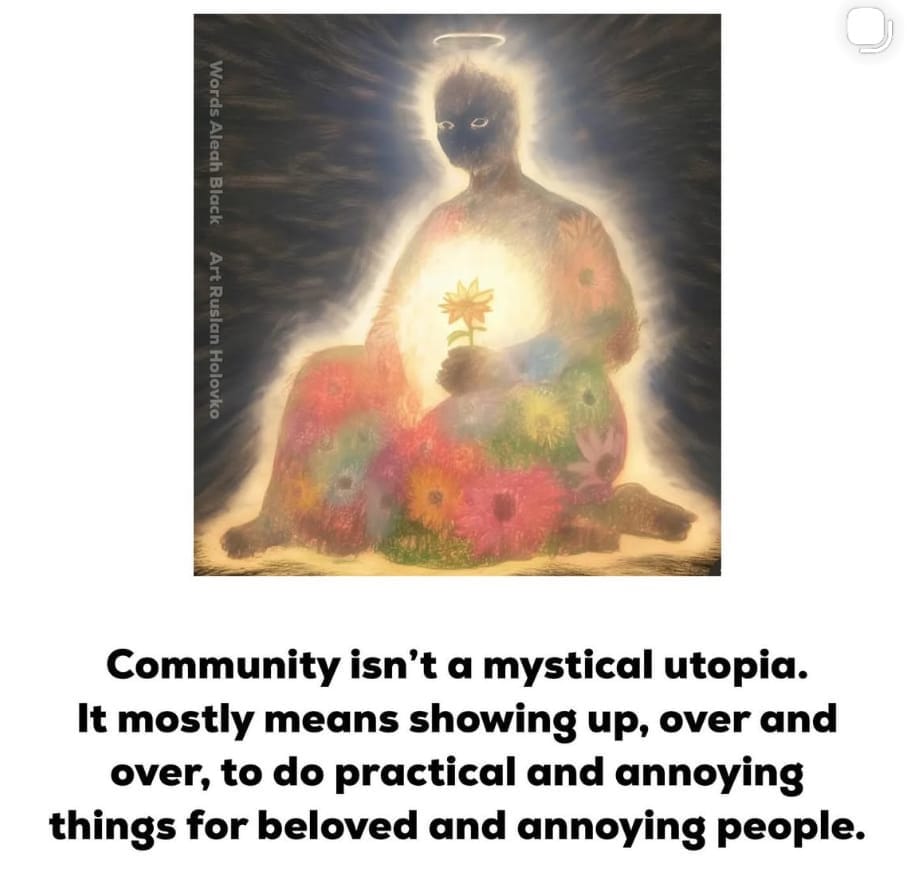
Bex: I think this commitment to self-isolation and preservation comes from a mentality of not having enough to give. We have weaponised self-care to the extent of thinking that we must always have a full cup before we can give to others. Under capitalism, we do cost-benefit analysis of everything, including our friendships and community! We don’t want to be a villager if it is going to cost us.
And yet, I promise you that it will cost us so much more if we don’t. We simply cannot afford to go on the way we are within the conditions we find ourselves in. I understand how difficult it is to work a full week, have families to care for and thrive under the exuberant cost of living - times are bloody hard. However, by leaning into intentional communities to share the load of child-care, food spending and resource sharing, we will get so much more in return.
Reciprocal flow baby!
Emily: Yes! That's exactly it! Exactly! I really like Priya Parker, the author of The Art of Gathering: How We Meet and Why It Matters. In an interview with NBR she said:
"...everybody's longing for community. We long to be part of a village. We long to have people come over and help us, but when's the last time you've hosted something? When's the last time you have helped somebody move? When's the last time you picked somebody up at the airport? It's almost like community has become consumption instead of production."
Showing up to me is the first part of building community. You have to be there for people, not just expect them to be there for you.
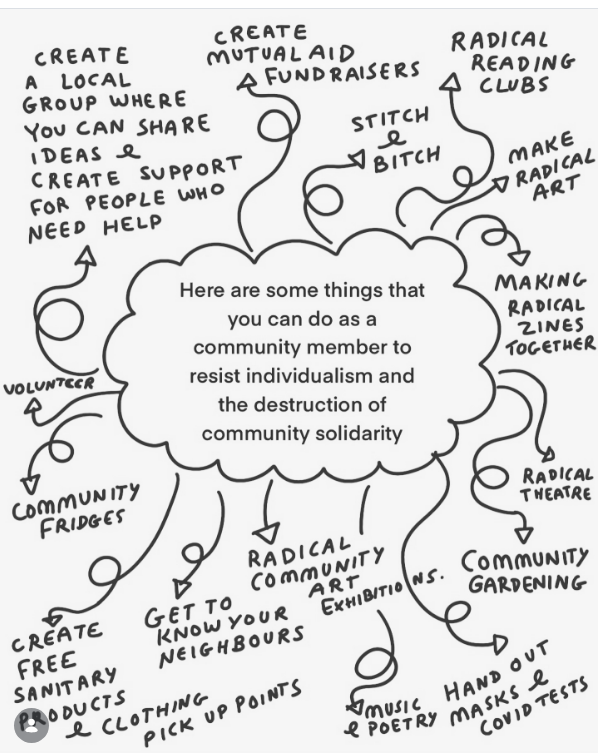
I think people think creating community is hard or scary. It's really just organising something - anything! Host a catch-up, gathering, or event you'd want to go to. A playgroup, a cult movie club, a Heated Rivalry rewatch party, a No Lights No Lycra disco in the dark...anything!
I don't get to go out nearly as much as I'd like because of my kids. My youngest needs help falling asleep every night. So, what I do is just jam pack my calendar with events from Facebook events or events on Humanitix. Even if I can't go, I put them in my calendar just in case. Just in case the stars align and I have some free time. I sign up to the library and museum and my local community hall to get updates on events happening during the day, and I sign up to my favourite bars and venues for gigs and fundraisers. 99% of the time, I can't go. But sometimes I can!
You have to take 'social risks' which I get is scary - and scarier when you're already scared. But we are adults, we have to get used to going out on our own! We have to be stoked with our own company sometimes. Go to a gig on your own. Go to an event on your own! When I run events, I specifically go over to people sitting by themselves and see if they want to dance or join in on whatever we're doing. That's how you make friends when you're five, and it's also how you make friends when you're 45!
Ideas for gatherings to help you build community
- Recipe sharing nights. One person teaches the group their favourite recipe and you all eat it together!
- Power-point night. Share a powerpoint on anything you're obsessed with - I went to one where there was an amazing powerpoint on the history of pigeons that made me love pigeons.
- Open mic story nights. Host an open mic story night. Five minutes to tell a funny or sad story. Storytelling is what brings us together.
- Picnic for parents. Organise a picnic for parents in your area or parents who are interested in socialism or parents of kids who are obsessed with the Titanic.
- Documentary night. Get a group together to watch one documentary a fortnight. Easier than reading a book.
- Suburban Walking Club. Go to a different suburb each week and walk around judging people's gardens.
- Clothes swap and wardrobe clear-out. My friends are amazing at this one - we are brutal with each other's wardrobes (trust me - I've been savaged) and it's amazing.
- Admin night. Everyone comes with the one thing they haven't done that they need to do - I would do my will. Or get life insurance.
- Trifle night. I've done this! It was so fun. I was obsessed with trifle when I was pregnant and asked everyone to bring a trifle. We had six different trifles!
So - You’ve hosted a fun event. What are some other ways to really be part of your community and have them benefit from you being part of the community?
Bex, you recently shared on Instagram some amazing ideas - would you like to share them here?
Bex: Many of us want to invest into community and experience that reciprocal flow but we don’t know how - or - we think that it is going to be too expensive. I recently shared four simple ideas to get people started:
- Create a gifting/koha account so that you have spare funds to give people in times of need. This could be as little as $10 that comes out of your fortnightly pay! It means that when you have friends or people in your community going through hardship, you already have some funds to support them with.
- Start a spreadsheet with a group of friends or neighbours with skills, tools or resources that you have to share. This is mutual aid in action!
- Create a roster among one of your community groups for working bees in your homes or gardens. Often, we try to do things on our own and spend money to hire people/tools when they already exist within our community!
- Start a care fund/community insurance scheme with a group of friends or in your workplace. You can all put in as little as $5 a week/fortnight and use the pool of money to support someone in the group when they are having a rough time or need a care package.
Remember, community care doesn't mean that we make ourselves suffer; the whole point of it is to relieve the suffering of us as a whole society. Our current economic and class systems are not working; we are heading for societal collapse.
We must find alternative ways of providing for ourselves and for others without relying on an oppressive system that only seeks to benefit those at the top.
I truly believe that if we choose community over capitalism we can re-build a society that is equitable and prosperous for all.
Emily: Amen to that. Thank you so much Bex. I hope you'll come back to join us again, I know we will need wisdom and experience like yours in the coming months and years.